

Exogenous and Endogenous Energy: Understanding Them Correctly to Optimize Training Performance
Every athlete understands the importance of energy to performance in competition and training. However, not all energy sources are the same. We have two main sources of energy : endogenous energy (from internal fuel reserves) and exogenous energy (from additional energy intake such as food, gels, and sports drinks). Understanding the difference between these two sources helps athletes develop smarter training and nutrition strategies, maximizing the potential of their body's "engine."
This article will explain endogenous and exogenous energy in endurance sports in a scientific yet easy-to-understand way. We will explore what endogenous energy is, how the body creates and uses it (from ATP to glycogen , fat , and even lactate ), and why focusing on developing endogenous energy sources during training is more important than relying on supplements. Simultaneously, the article will clarify why most professional athletes are very cautious about supplements due to the risk of doping, and how a proper diet (especially with nutrient-rich natural foods in Vietnamese cuisine) can adequately meet your energy needs. Finally, we will look at how tools like TrainingPeaks provide data on energy expenditure (calories, fat-to-carb ratio) after each workout, helping athletes and coaches monitor and optimize their training.
Endogenous Energy – The Body's Internal "Fuel Tank"
Endogenous fuel is the fuel your body already has within it. Imagine your body as a car: endogenous fuel is the "gas tank" that's been filled before you set off. The body stores endogenous fuel in various forms, primarily including:
Glycogen (Carbohydrate storage): This is the form of carbohydrate stored in muscles and the liver . You can think of glycogen as "premium fuel" —it burns very quickly and intensely, providing the main energy source for high-intensity activities. However, this glycogen "fuel tank" has a fairly limited capacity (the body can only store about a few hundred grams of glycogen, equivalent to ~1,600–2,000 kcal). That's why athletes often need to replenish carbohydrates (carb-loading) before long competitions to replenish this glycogen store. If glycogen is depleted midway through, you will experience a "fuel shortage" and will not be able to maintain the intensity of the competition.
Fat: Body fat is a nearly inexhaustible source of energy , like "diesel" fuel – abundant but slower-burning than glycogen. Fat provides the primary energy source for low- to moderate-intensity and prolonged activities . Even a lean athlete can carry tens of thousands of kcal in the form of fat. The problem is that the body needs time and oxygen to metabolize fat into usable energy; therefore, at high intensity, fat doesn't meet energy demands as quickly as glycogen. However, through training, we can "teach" the body to burn fat more efficiently, even at relatively high intensity, thus conserving glycogen for when it's truly needed.
ATP and Phosphocreatine (PC): ATP (adenosine triphosphate) is the immediate energy source for muscle contraction. Muscles always store a certain amount of ATP and phosphocreatine for use in the most urgent situations. This energy source is similar to a short-term booster , only sufficient for maximum activity for the first 5–10 seconds – for example, when you sprint 100m or lift very heavy weights . After about 10 seconds, ATP and PC are depleted and the body must switch to using glycogen or other pathways. Although the ATP-PC system only plays a role in the extremely short phase, it is crucial for sports requiring explosive, immediate strength. Training (such as 5–10 second sprints , maximum weightlifting 1–3 repetitions) can somewhat increase phosphocreatine reserves and ATP regeneration, helping to improve speed and strength.
Note: The body rarely uses protein as its primary fuel during normal exercise. Protein is mainly used to build and repair muscles and cells. Only in states of severe energy deficiency or ultra-long training without sufficient carbohydrates does the body begin to break down protein (muscle) for energy, which is, of course, undesirable. Therefore, we want our bodies to rely primarily on carbohydrates and fat , rather than "burning" our own protein.
Lactate – A High-Performance Recycled Fuel
When it comes to lactate (lactic acid), many people immediately associate it with the feeling of "muscle fatigue" or exhaustion. Lactate has long been unfairly labeled a "waste product" that causes muscle fatigue, but modern science has proven the opposite: lactate is actually a valuable byproduct that the body can recycle and reuse very efficiently. In other words, lactate is like an energy-rich byproduct produced when muscles burn glycogen at high intensity.
When you train hard, muscles (especially fast-twitch muscle fibers) break down anaerobic sugars and produce lactate along with H+ ions. It is the excess H+ ions that cause acidosis and muscle fatigue, not lactate itself . In a well-trained body, lactate is considered a renewable fuel source : the body "collects" lactate from working muscles and transports it through the blood to other organs such as the heart, liver , and even slow-twitch muscle fibers with excess capacity. There, lactate is converted back into pyruvate and then into ATP to continue providing energy for muscle activity . This process is similar to a hybrid car that recharges itself while running – the better an athlete is at reusing lactate, the more like a high-performance hybrid machine that can "recharge" while competing .
This illustrates the body's lactate recycling process : lactate produced by muscles during strenuous exercise is transported back to the heart and liver to be converted back into useful energy. The better an athlete is at reusing lactate, the more endurance they have and the less likely they are to experience burnout at high intensity.
The key point is that you can absolutely improve your lactate utilization through training. Studies show that elite athletes often have significantly lower blood lactate levels than recreational athletes at the same intensity level, partly because their bodies clear and reuse lactate very quickly within the working muscles. Through sustained training (e.g., Zone 2 long runs/cycling sessions), the body increases the number of mitochondria and lactate-transporting proteins (MCT-1) in slow-twitch muscle fibers, helping to burn lactate more efficiently; at the same time, high-intensity training also increases the transport of lactate out of the muscles faster (MCT-4). As a result, your lactate threshold (the threshold at which lactate begins to accumulate rapidly – equivalent to the maximum sustained exercise threshold for about 1 hour) will be raised. The later you reach this threshold, the longer you can maintain high performance before being blocked by the lactate "wall".
Lactate tolerance and lactate clearance exercises , often included in training programs by coaches, serve this purpose. These are typically high-intensity interval training sessions (e.g., 400m repetitions, 30-second all-out cycling sets) designed to intentionally generate a large amount of lactate, interspersed with sufficient recovery periods to allow the body to learn to tolerate high lactate levels and clear excess lactate during rest. Over time, the muscle's lactate tolerance will improve significantly – you can train harder before feeling "burn" and needing to stop. This is the secret to high-intensity competition while maintaining endurance . Indeed, lactate handling ability is one of the factors that distinguishes elite athletes from average ones: the more excellent an athlete is, at the same power level, the less lactate accumulates and the faster it clears, allowing them to maintain sustained high speed.
Exogenous Energy – “Refueling” from the Outside
In contrast to endogenous energy, exogenous fuel is the energy you take in from the outside during training or competition. Simply put, this is the food, sports drinks, energy gels, energy tablets, etc., that you consume to replenish your body's fuel. If you think of endogenous energy as your fuel tank, then exogenous energy is like refueling or supplying fuel to your vehicle while it's running.
Cyclists are supplementing their energy intake with exogenous energy gels during training. These gels and sports drinks provide fast-acting carbohydrates that help maintain blood sugar levels and protect endogenous glycogen stores during long training sessions or extended competition.
The role of exogenous energy is particularly important in long-duration endurance events (such as marathons, long-distance cycling, triathlons, etc.). This is because, as mentioned, the body only stores a limited amount of glycogen – usually only enough to fuel about 60–90 minutes of continuous high-intensity exercise. Without replenishment, you will deplete your glycogen stores and lose strength. Exogenous energy (primarily easily absorbed carbohydrates) helps "fuel" the muscles, maintain stable blood sugar levels, thereby delaying fatigue and extending the time you can compete at a high level.
However, using exogenous energy also requires strategy and discipline . The ultimate goal of a competition nutrition plan is to use exogenous energy rationally and disciplinedly to protect and conserve precious endogenous glycogen stores . In other words, you want to burn as much fat as possible, and use just enough exogenous carbs , so that stored glycogen only plays a "lifeline" role during very high intensity or towards the end of the race. This requires you to train your body to gradually absorb energy while exercising – this is the goal of "gut training" .
So how much exogenous energy intake is enough ? This depends on each individual's capacity and intensity of exercise. The latest research has raised the recommended carbohydrate intake for endurance competition: previously, it was often recommended to consume around 30–60 g of carbs per hour, but now sports nutritionists recommend 90 g of carbs per hour or more for races lasting 2-3 hours. In fact, many professional cycling teams in the Tour de France have implemented a level of 100–120 g of carbs per hour for their athletes, through sports drinks, gels, energy bars, etc. This is a very high amount and not everyone can suddenly absorb it – if you haven't trained your stomach, consuming >90 g of carbs per hour can cause digestive shock (bloating, nausea). Therefore, nutritional training is extremely important: athletes must spend several weeks before the race training their digestive system to adapt to consuming high amounts of carbs while running/cycling. With proper gut training, you will absorb more exogenous energy without problems, thereby optimizing your performance.
In short, exogenous energy is a necessary source of fuel to help you conquer long distances. But the key is to use it correctly : choose the right type of energy drink (e.g., gels, bananas, diluted sports drinks), consume the right amount at the right time (e.g., sip a carbohydrate-rich drink every 15-20 minutes, supplement with a gel pack of ~20-30g carbs every 30-45 minutes, depending on recommendations), and practice beforehand during long training sessions to get your digestive system used to it. Exogenous energy will be most effective if it is combined harmoniously with endogenous energy – that is, you are both replenishing energy externally and making good use of the "fuel" you have diligently accumulated internally.
Training to Maximize Your Inner Energy
During training, the primary goal for endurance athletes is to improve the efficient use of endogenous energy sources – specifically, increasing fat burning capacity, glycogen storage and mobilization , and lactate recycling as mentioned above. This helps you sustainably improve endurance and speed, rather than relying on constant external energy intake. Below are some typical training methods to optimize endogenous energy systems:
"FatMax" training (maximum fat burning): FatMax is a term referring to the intensity level (usually measured in heart rate or power) at which the body achieves its highest fat-burning rate during exercise. In other words, this is the threshold at which the percentage of fat used as fuel peaks. Long-term training at the FatMax threshold (usually around Zone 2 for many people) helps the body increase fat-burning enzymes , increase the number of mitochondria in the muscles, and improve the ability to use fat for energy. As a result, after a period of time, at the same pace/power level, you will burn a higher percentage of fat and burn less glycogen than before training. This is extremely beneficial for endurance: you will be more persistent, and at the end of the workout, you will still have glycogen reserves to increase speed when needed. For example, a 90-minute run at an easy pace (Zone 2) can help the body gradually get used to drawing primarily from fat for energy. Many studies support the strategy of occasionally training with low glycogen levels (train-low), such as exercising in the morning before eating or after having depleted glycogen the night before – this forces the body to mobilize more fat, thereby stimulating physiological adaptations that increase the body's ability to oxidize fat in the long term.
Lactate Threshold/Lactate Clearance Exercises: These exercises aim to raise the lactate threshold – the highest intensity level at which the body can balance lactate production and consumption . Threshold runs and tempo rides typically last 10–30 minutes around the lactate threshold, gradually increasing the body's tolerance and lactate utilization . Additionally, "over-under" exercises (alternating between exceeding and falling below the threshold) train the body to clear lactate more effectively while maintaining near-threshold intensity. These exercises raise the lactate threshold (or endurance threshold, usually roughly equivalent to the second VO₂max or LT2 ) – meaning you can run/cycle faster before lactic acid builds up and causes muscle fatigue. In short, your "ceiling" is raised, allowing you to run faster without becoming exhausted . Science shows that exercising just below and just above the lactate threshold significantly improves the body's ability to clear lactate fatigue and tolerate higher lactate levels .
FRC (Functional Reserve Capacity) exercises: Simply put, FRC is "functional reserve capacity" —that is, the amount of anaerobic energy you can mobilize to support when exceeding your lactate limit. Some coaches describe FRC as a "backup battery" that provides extra energy when your power exceeds your lactate limit. Increasing FRC means you have more anaerobic energy available for situations requiring bursts of speed or maintaining high speeds above your limit for short periods. To improve FRC, exercises are often short, high-intensity intervals (similar to lactate tolerance exercises)—for example, pedaling at full speed for 30 seconds, resting for 30 seconds, and repeating this many times. These exercises increase the storage and resynthesis of phosphocreatine, increase glycolytic enzymes and acid tolerance, thereby raising your lactate 2 "ceiling." As FRC increases, you'll find yourself able to unleash bursts of power more times before exhaustion sets in. However, the downside is that FRC workouts are highly tiring, require long recovery times, and should only be undertaken when you have a good foundation.
Variable speed training and exercise variety: The body operates on the principle of "adaptation only when stimulated." To maximize the potential of energy systems, an effective training program usually combines various exercise types: slow long exercises (fat burning), tempo/threshold exercises (increasing lactate threshold), VO₂max interval exercises (increasing maximum oxygen consumption), speed sprints, etc. Each exercise type targets a different aspect of the energy system. Diversity and proper distribution help you become a well-rounded athlete in terms of energy metabolism – possessing both good fat endurance and the ability to unleash power when needed and recover quickly. This is also the philosophy of modern training: no system should be neglected ; even endurance athletes should have periods of speed and strength training, and conversely, speed athletes need a certain foundation of endurance.
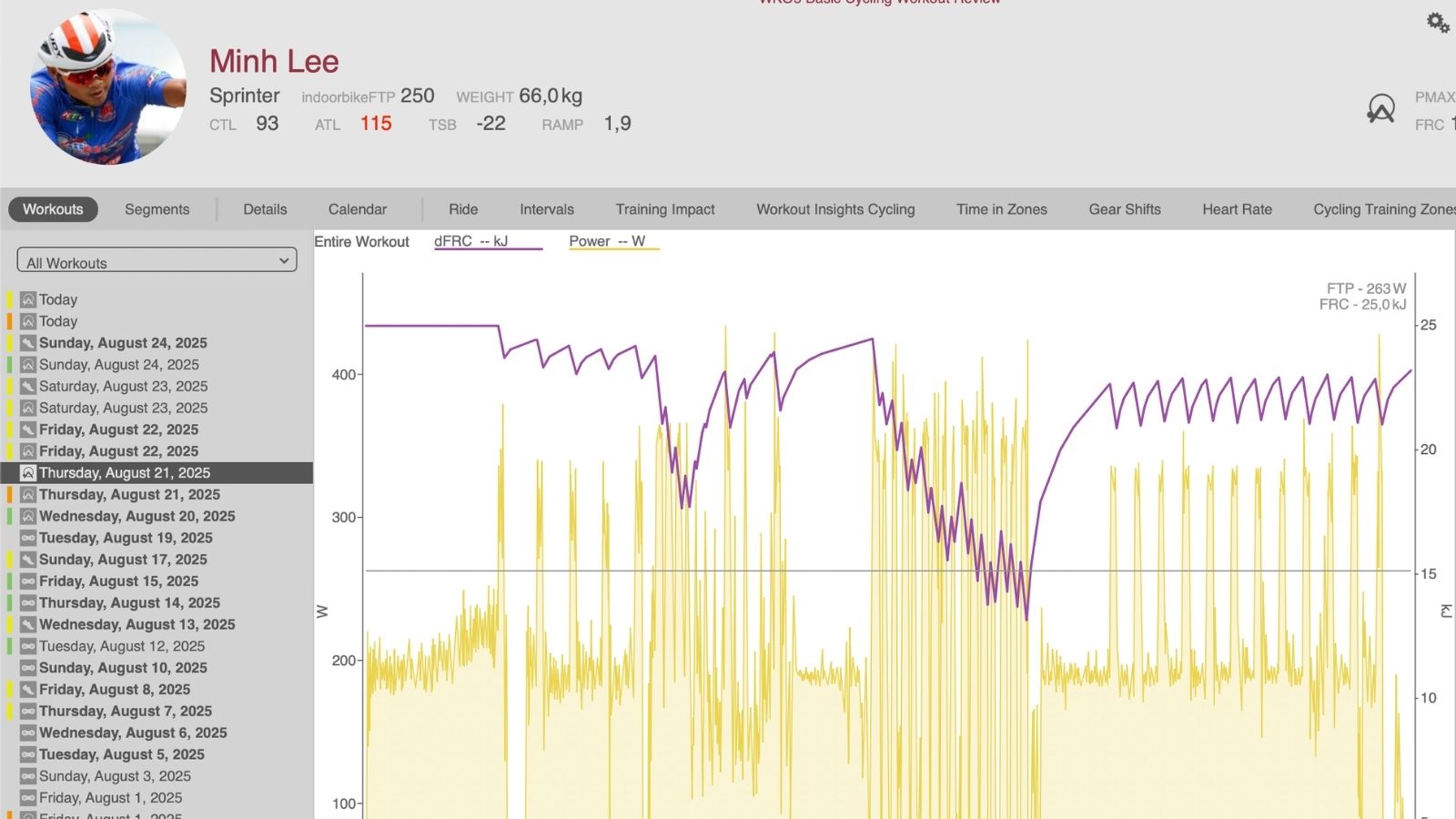
Minh Lee's cycling workout shows that the athlete's anaerobic "battery" is 25 kJ, a very high number, so you almost never reach the Lactate 2 threshold, and Minh Lee's energy recovery ability is quite good after each push-up at different thresholds.
In short, training to optimize endogenous energy requires patience and intelligence. You are training your body to become a flexible metabolic machine: able to switch between fat and sugar depending on the situation, with abundant anaerobic "batteries" ready when exceeding limits, and knowing how to utilize lactate as "recycled fuel." Once you have built this foundation, you will see a significant improvement in performance with less reliance on constant energy intake . Long-term benefits also include better metabolic health, less bad fat accumulation, and increased insulin sensitivity (due to the frequent mobilization of fat and lactate for energy).
Natural Nutrition vs. Dietary Supplements: Is Supplementation Necessary?
In amateur sports, many people overuse supplements in the hope of increasing performance – from protein powders and BCAA tablets to pre-workout supplements and fat burners. However, for most athletes who already have a balanced diet, these products are often unnecessary . In fact, a proper diet with natural foods is sufficient to provide everything your body needs for training and recovery.
Traditional Vietnamese cuisine is a great example of a diverse and healthy diet. Vietnamese meals are typically balanced in carbohydrates (rice, noodles, pho, etc.), protein (meat, fish, eggs, shrimp, tofu, etc.), healthy fats (vegetable oil, fish oil), and plenty of fruits and vegetables. A typical Vietnamese meal includes white rice, braised fish, boiled vegetables, and vegetable soup – providing ample carbs for glycogen , protein for muscles, and countless vitamins and minerals from vegetables and natural foods. It can be affirmed that the traditional Vietnamese diet is very beneficial to health , with cooking methods mainly involving steaming, boiling, and light stir-frying, using little oil and fat, and a wide variety of fresh ingredients. Fresh fruits and vegetables in Vietnamese meals provide abundant vitamins (A, C, E, B vitamins, etc.) and antioxidants, helping the body fight inflammation and recover better like beef pho with its broth simmered for hours contain plenty of collagen and minerals; Or salads (nộm) rich in vitamin C, digestive enzymes… All of these contribute to supporting the athlete's body.
With such a complete nutritional foundation, your body will naturally have enough raw materials to synthesize ATP , store glycogen, repair muscles, etc. Nutritional supplements should only be considered as a supplement in cases of genuine deficiency. For example, female athletes may supplement iron if they have iron-deficiency anemia; those who train very intensely may need whey protein if their diet lacks sufficient protein; or vitamin D and omega-3 supplements if their diet is deficient. However, it is important to emphasize that these cases require testing and prescription from a doctor/nutritionist . Self-medicating with nutritional supplements indiscriminately is not only costly but sometimes harmful (e.g., vitamin overdose, overloading the liver and kidneys due to the metabolism of excess substances).
In particular, any professional athlete is wary of dietary supplements for one important reason: the risk of doping . Many supplements on the market contain banned substances that are not listed on the label due to cross-contamination during production or the deliberate addition of stimulants to increase effectiveness. A study published in the journal Frontiers analyzing 18 years of doping test data in Norway showed that 26% of athletes who tested positive claimed the source was supplements, and evidence confirmed that 14% of all positive cases were due to supplements contaminated with banned substances . Another survey by the IOC of 634 samples of supplements circulating in 13 countries showed that 15% contained anabolic steroids without being listed on the label. Furthermore, some products openly contain banned substances (for example, some "weight loss drugs" contain amphetamine or sibutramine; or "muscle-building drugs" contain prohormones). WADA and national anti-doping organizations have repeatedly warned athletes about the risks of using dietary supplements, as many "wrongful" doping cases have occurred due to accidentally ingesting banned substances in supplements .
A key principle in anti-doping is the athlete's "absolute responsibility" for what they put into their body. You can't excuse yourself by saying, "I didn't know there was a banned substance in that food"—whether intentionally or unintentionally, you're still considered to have violated the rules . Therefore, most professional athletes minimize their use of supplements unless absolutely necessary. They only use products that are truly safe and certified by independent organizations (such as NSF Certified for Sport, Informed-Choice, etc.), and always weigh the benefits against the risks. No supplement is 100% safe , and don't jeopardize your career for a supplement of unknown origin . Simply put: prioritize eating real food over taking pills or powders. A banana, a handful of raisins, or a glass of chocolate milk after a workout can probably provide you with enough energy and essential nutrients, and it's tastier and safer than any vitamin supplement pill.
Track Energy Expenditure – Understand Your Body to Train Better
Today, athletes have many tools to track their body's energy expenditure during training. One such tool is software like TrainingPeaks , which allows for very detailed analysis of training data. After each run or bike ride (if you use a heart rate monitor, power meter, etc.), TrainingPeaks can estimate how many calories you burned , and how many of those came from carbs and how many from fat . This feature (called Fueling Insights in TrainingPeaks) is based on algorithms and the athlete's physiological data to provide two metrics: Fat Calories and Carb Calories – that is, the energy expended from fat and from carbohydrates ( help.trainingpeaks.com ). This is a very useful advancement, because previously, watches or devices only showed the total calories burned, but now we know the ratio of fat to sugar used during training.
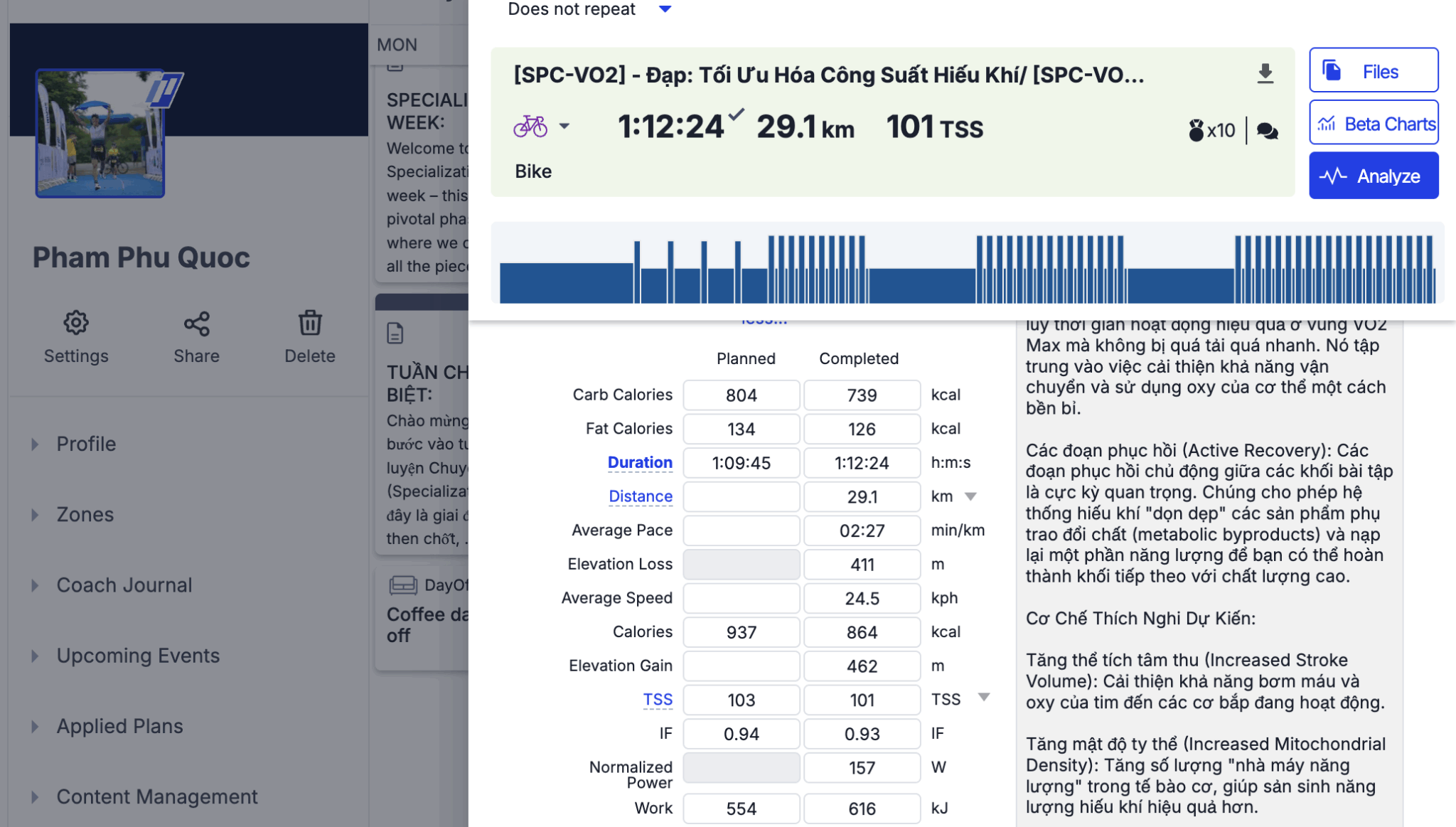
Through a single cycling session, we can see how many calories are burned, including how much from carbohydrates and how much from fat, based on the athlete's own body. Currently, the algorithm from Trainingpeaks is quite accurate in terms of performance statistics.
For example, you might see that after a slow 10km run (about 60 minutes), your body burns 500 kcal, of which 300 kcal comes from fat (equivalent to ~33g of fat) and 200 kcal from carbohydrates (~50g of carbohydrates). Conversely, a 30-minute tempo run burns 400 kcal, but mostly from carbohydrates (e.g., 300 kcal of carbs, 100 kcal of fat) because the high intensity forces the body to use more glycogen. This information helps you better understand how your body is using fuel at different intensity levels. From there, you can adjust your diet and training accordingly: for instance, if you find yourself burning too little fat even in easy workouts, you may need to add Zone 2 sessions to improve fat burning; or if you're preparing for a long race, you might want to increase your fat burning rate to conserve glycogen.
Furthermore, knowing your carbohydrate intake allows you to plan your energy intake more accurately during competition. If you burn 250 kcal (~62g) of carbs per hour, you'll try to consume a similar amount (e.g., 60g carbs/hour) to avoid a deficit. Conversely, during training sessions focused on metabolic improvement (like low-energy training), you'll intentionally avoid consuming extra carbs to allow your body to adapt. All these decisions are based on listening to your data and understanding your body.
Of course, the numbers from the software are only estimates (based on general models and average data). But with the help of an expert or your own experience, you can adjust and use them as a powerful tool. Tracking energy expenditure also helps you assess progress: for example, for the same running distance, if after 3 months you see an increase in fat burning (and a decrease in carbs), that's a sign that your training has improved your metabolism – an encouraging achievement!
Conclude
Both endogenous and exogenous energy play essential roles in endurance sports. Endogenous energy is the foundation – it's the "fuel tank" you carry, determining your basic endurance. Through scientific training, you can expand this "fuel tank" and make your engine run smoother and last longer . Exogenous energy is the source of power – when used correctly, it's like adding fuel to help you sprint to the finish line powerfully without worrying about stalling midway.
It's crucial to balance and understand these two energy sources. Take the time to train your body to become more flexible in using endogenous energy: don't be afraid to jog slowly for better fat burning, or do threshold exercises to raise lactate levels. At the same time, learn to intelligently source energy from external sources: choose appropriate foods, train your stomach to tolerate them, and always prioritize safety. Avoid the temptation of "energy boosters" or over-advertised supplements – there are no magic shortcuts that can replace a structured training and nutrition regimen .
With solid scientific knowledge and perseverance, every athlete – whether professional or amateur – can optimize their energy levels. Then, you'll be surprised at what you can achieve: faster, stronger, more sustained energy, and above all, a healthy, resilient body from the inside out. Remember, the best fuel for your body is what you've accumulated through sweat on the training field and healthy daily nutrition – nothing comes in a pill . Wishing you scientific training and always full of energy on your journey to conquering your goals!
References:
Gopeaks, Triathlon Nutrition: A Comprehensive Plan for Enduro Distance , special topic: Endogenous vs. Exogenous Fuels gopeaks.vn .
Gopeaks, Tri-Discipline Nutrition: … , special topic Lactate – Recycled Fuel gopeaks.vn .
TrainingPeaks Help, Substrate Utilization (Fueling Insights) – explains the difference between burning fat and carbs during exercise help.trainingpeaks.com .
San-Millán et al., study on lactate clearance ability in elite athletes trainingpeaks.com .
Research on doping due to dietary supplements (Frontiers in Sports and Active Living, 2022) shows that 14% of doping cases are related to dietary supplements and 15% are contaminated with banned substances (frontiersin.org ).
Hannah Kittrell et al., studied FatMax – the maximum fat-burning intensity that varies from person to person.
TrainingPeaks, Everything About Thresholds – training above/below the threshold to improve tolerance and lactate clearance trainingpeaks.com .
WADA & Sport Integrity : Doping risk warning from food supplements frontiersin.org sportintegrity.gov.au .