
Learning Freestyle from the Fundamentals: The 'Recovery' Phase – The Rhythm of Swinging Arms Forward & The Secret to Relaxing in the Right Place
Hello everyone, we meet again!
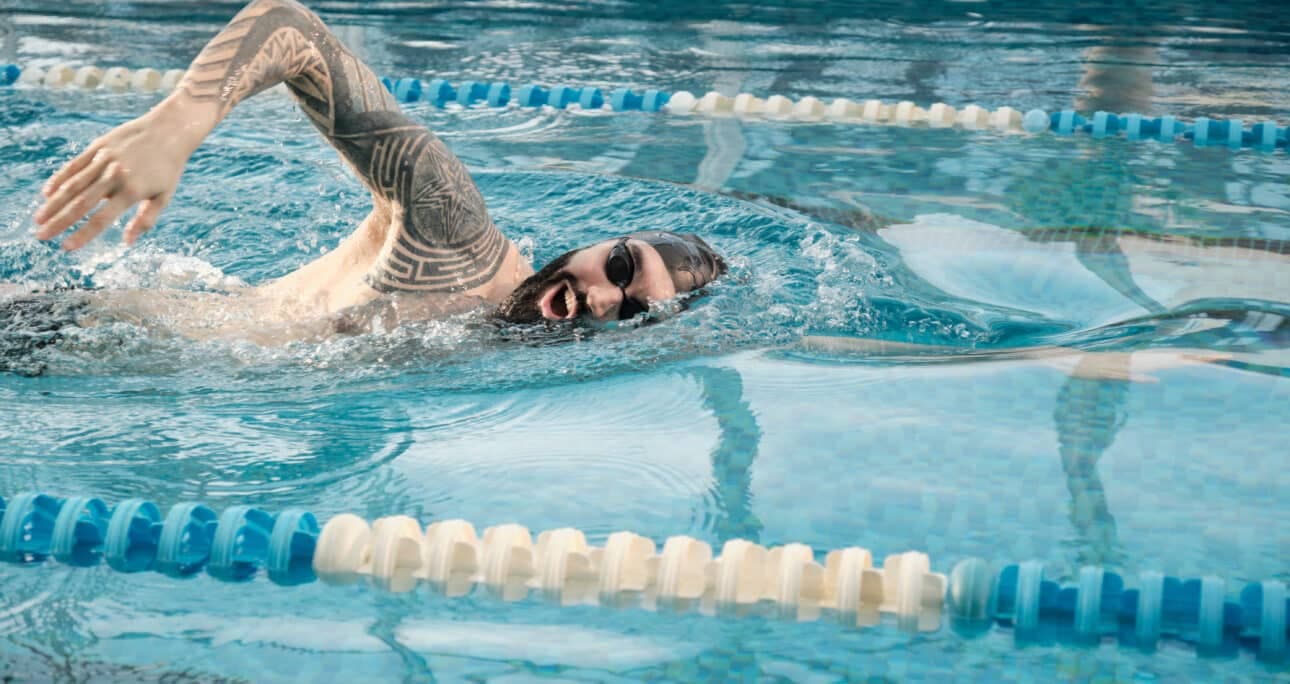
After learning how to "release the rope" and neatly get your arms out of the water, the arm's journey isn't over yet. It begins an "aerial" phase – the Recovery phase (forward arm swing) . Today we'll learn about the freestyle arm swing technique.
Many people, including some coaches, call this the "resting" phase. But is that really the case? Today, Vi will show why swinging your arms "slowly and completely relaxed" can actually cause you to sink, and where the secret to true "relaxation" lies.
Learning Objectives
After reading this article, you will:
Understanding the true goal of the Recovery phase: effective transition and maintaining buoyancy.
Master the core principle: "Bring your elbows forward, and relax your hands."
Understanding why rhythm is extremely important in this phase.
Technical Analysis: High-Speed Transition Phase
1. The True Goal of the Recovery Phase
Contrary to its name, this is not the time to completely "rest." The main goal of the Recovery phase is:
Bring your hands back to the front position efficiently and rhythmically.
Do that without affecting the body's buoyancy.
2. Technical Analysis: "Bring your elbows, keep your hands relaxed"
Recall the exercise "Dividing the Tasks" . In this phase, the shoulder muscles (especially the deltoid) are the "workers".
Shoulder muscles work: They will be activated to actively "bring the elbow forward ." This is a purposeful action, using shoulder strength to lead the entire arm.
Relaxation point: While the shoulder is working, the forearm and hand should be completely relaxed , hanging naturally from the elbow. This is where the "relaxation" is needed.
3. Rhythm (Rating) – Why You Shouldn't Swing Your Arms Slowly?
Here's a secret few people notice. Your arm, when out of the water, becomes a heavy "weight." If you swing your arm forward too slowly, you're holding that "weight" in the air for too long. According to the principle of leverage, it will tend to pull down the opposite side of your body. Your head will be especially affected , shortening the inhalation phase as your head sinks quickly and severely impacting oxygen supply to your body.
Therefore, the recovery phase needs a certain rhythm, should be continuous, and connected to the entire swim.
4. So, should you bend your arm or keep it straight?
This is a question Vi gets asked a lot. The answer is: whether your arm is slightly bent, heavily bent, or almost straight during recovery doesn't really matter. It depends on shoulder flexibility and individual style, much like whether you prefer "blue or pink" —it's a matter of style, not the core element.
The immutable principle to remember is: the "engine" is the SHOULDER MUSCLE, whose job is to pull the ELBOW forward from back to front .
As long as you follow this principle, whether your arms are bent or straight is acceptable. (A little secret: professional athletes, especially short-distance swimmers, sometimes use a nearly straight arm swing technique to take advantage of inertia, increase the arm stroke frequency (rating), and minimize gliding time).
Practice Corner: Reprogramming the Freestyle Swimming Arm Swing
1. Exercise: 'Half Recovery' (Half-phase arm swing)
Objective: Focus on activating the shoulder muscles and correctly initiating the elbow swing phase.
Perform:
Start in a Kick on Side position, with your upper arm pressed along your body.
Actively use your shoulder muscles to bring your elbow forward about halfway (to shoulder level) and then stop. Feel your forearm and hand relax as you do so.
Slowly return your hands to their original position along your body.
Repeat multiple times for each side to build "muscle memory".
2. Exercise: Fingertip Drag Drill (Sliding your finger on the water surface)
Objective: Practice swinging your arms with your elbows high, without trying to "clutch" your hands tightly against your armpits, but keeping them relaxed.
Instructions: Swim freestyle, but during the recovery phase, keep your fingers lightly touching and "dragging" a line on the water's surface from your hips up to the front of your head. To do this, you must keep your elbows high and your hands relaxed.
Advice from Coach Vi
"Feel the contrast: Shoulders 'working,' hands 'resting .' When you can clearly feel this difference during recovery, you've taken a huge step forward."
Summary & Homework Assignment
In summary: Recovery is a smooth transition phase, not a complete rest. Actively "bring your elbows forward" using your shoulder muscles and completely relax your hands and forearms.
Homework: On your next swim, spend 5 minutes doing 'Half Recovery' exercises on land first, then get in the water and do the 4x25m or 4x50m run with fins. Feel your shoulder muscles being activated.
Once the arm has completed its "aerial" journey, it will return to its starting point. The final lesson of this module will be the 'Entry & Glide' phase . See you soon!
Sincerely, Coach Vishark.