
Learning Freestyle Swimming from the Fundamentals: The "Conductor" of the Hips – The Secret to Leading the Rhythm
Hello everyone, coach Pham Thuy Vi aka Vishark is back with lesson 4 in the series "Learning the Freestyle Swim Correctly from the Fundamentals".
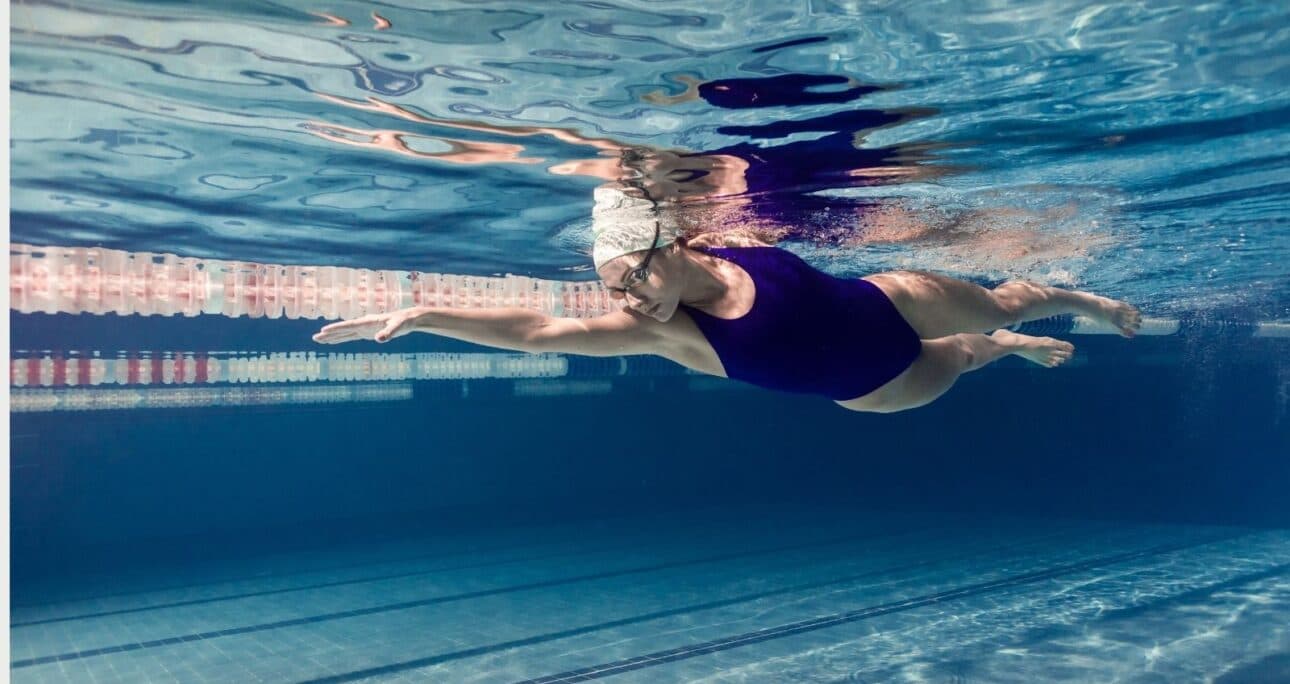
Did you know that a classic name for freestyle swimming is "Front Crawl"? But if I had the power to change the name, I'd immediately change it to "Side Crawl" ! Because the truth is, when swimming freestyle correctly, you almost never lie completely face down. Most of the time, your body is tilted from side to side.
And who conducts that powerful "sideways glide"? None other than the "conductor"—your HIPS and the rotational movement. Today, we'll learn how this conductor regulates the "body orchestra," transforming your swim from a chaotic mess into a true symphony.
Article Objectives
After reading this article, you will:
Understanding why hip rotation helps lengthen swimming strokes, control rhythm, and connect the entire body.
There are two main schools of rotation: Hip-driven (rotation using the hips) and Shoulder-driven (rotation using the shoulders).
Practice exercises to feel and find the rotation style that suits you best.
Why Spin? The Role of the "Conductor"
Ah, it's like an orchestra without a conductor – the rhythm and tempo would be completely chaotic. A skilled conductor will help the entire orchestra coordinate their bodies seamlessly. The hip-led rotation offers four incredible benefits:
1. Glide further: When you rotate, your arms can reach 5-10cm further, creating a longer gliding distance with each arm stroke. If that's not convincing enough, try standing straight and extending your arms, then rotating your shoulders and hips forward and extending your arms again. See? That distance multiplied by thousands of arm strokes makes a huge difference.
2. Core activation: Instead of relying solely on your arm muscles, gently tightening your core during hip rotations strengthens your 3H axis and provides support for the most powerful pull. A well-timed core squeeze will 'lock' the 3H axis, transforming your body into a rigid unit for efficient force transfer.
3. Open your shoulders wider: When you rotate your body, having your shoulders higher provides more space for your arms to swing forward (recovery phase), significantly reducing the risk of shoulder joint lock-up – a classic injury for swimmers.
4. Makes breathing easier: A good turn will automatically bring your mouth closer to the water's surface, allowing you to breathe more easily without having to lift your head up.
Two Styles of 'Orchestra Conducting' – Which One Do You Prefer?
Each conductor has their own style. In freestyle swimming, there are two main conducting styles:
1. Conductor of the Symphony Orchestra: Hip-Driven
Characteristics: Rhythmic & Persistent. A slow, rhythmic, and sustained tempo.
Suitable for: Long-distance swimmers, triathletes, and anyone who wants to swim for extended periods and conserve energy. This is the foundation of efficient freestyle swimming.
2. The Conductor of a Rock Band: Shoulder-Driven
Characteristics: Fast & Intense. Fast, powerful, intense rhythm, played at the highest speed.
Suitable for: Short-distance swimmers (50m, 100m), or open water swimmers who are sprinting or overcoming strong waves.
Common Mistakes Made by 'Conductors'
Error 1: Orchestra Without a Conductor (Flat Swimming): Hips don't rotate, each part plays a separate beat, leading to chaos and wasted energy.
Error 2: Conductor 'Overdoing the Spin': Excessive hip rotation causes the entire orchestra to lose balance and "fall off the stage".
Error 3: Conductor and Orchestra Out of Time: Shoulders turn but hips don't, or vice versa.
Practice Corner: Practicing Conducting
1. Kick on Side Exercise
Objective: To feel the "commanding" role of the hips in maintaining balance for the entire orchestra.
Instructions: Push off the wall and lie completely on your side. Extend your lower arm straight above your head, and place your upper arm along your side. Gently kick your legs. Feel your hips at their highest point, controlling your entire body's balance. Wear flippers if needed.
2. Rotation Kick Exercise (Hip Rotation)
Objective: To train the hip "conductor" in how to direct the entire orchestra to spin from side to side.
Instructions: Begin with arms extended along your sides. After 6 leg kicks, actively use your hips and core muscles to rotate 90 degrees to a side-lying position. Return to the starting position and repeat on the other side. Note that your arms are largely uninvolved in this rotation. Wear fins and a hose if needed.
3. Variational Swimming Using the Hips
Objective: To learn how to use the hips to control rhythm.
Execution: Begin swimming slowly by gently rotating your hips and slightly tightening your core. Then, gradually increase your hip rotation speed to increase the frequency of your arm strokes. Let your hips lead the frequency!
Advice from Coach Vi (Tips)
“Don’t think about ‘trying to spin.’ Think about ‘reaching .’ As your right hand reaches the wall in front of you, let your right hip and shoulder pull naturally, and your left leg extend backward. Do the same with the other side. Let the ‘reaching’ action guide your spin.”
Summary & Homework Assignment
Summary: The hips are the conductor, determining the rhythm and connection of the entire swimming cycle. Start with the hip-driven style to build a solid foundation.
Homework: For your next swim, spend 10 minutes warming up focusing solely on the Kick on Side and Rotation Kick exercises. Feel your balance as you lean and rotate. Then, during the main swim, try to focus on: 'Reaching out to rotate'.
Wishing you all some relaxing moments underwater! See you in the next lesson!
🏔️ REACH THE TOP WITH GOPEAKS
These technical articles are the starting point on your journey to mastering freestyle swimming. But to truly progress and excel, you need a structured training plan and a supportive community.
At Gopeaks.vn , we offer training programs, in-depth knowledge, and exclusive resources designed to help you not only swim correctly, but also swim faster, farther, and more efficiently.
Visit https://justfitart.vn today to discover the right path for you and conquer new heights with Vi!