
History of Triathlon – Part IV: The Road to the Olympics – A “Rebel” Sport Becomes a Global Discipline
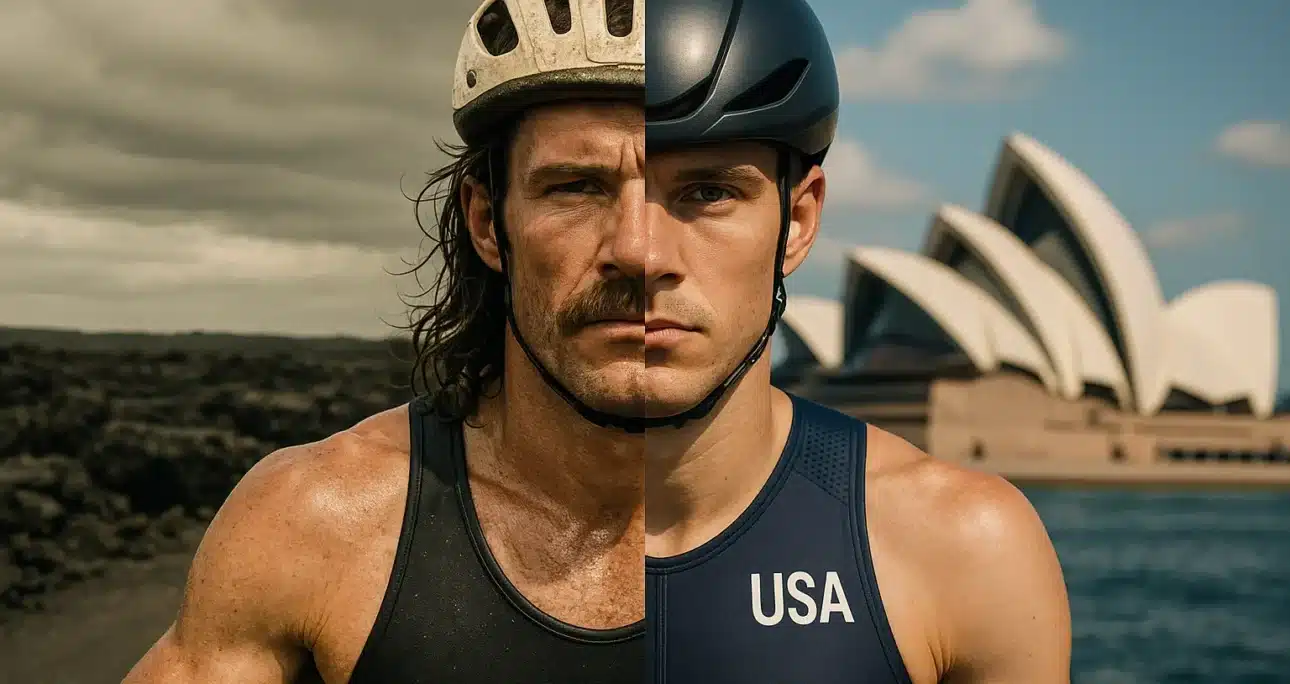
Imagine two portraits.
The first, taken in the early 1980s: an Ironman athlete in Hawaii—scruffy beard, sunburnt skin, body caked with mud and sea salt—crossing the finish line with the wild eyes of someone who has just conquered nature itself. He is a rebel, an explorer, a hero of the untamed world.
Now imagine the second portrait, taken in the year 2000: a triathlon athlete in Sydney, wearing a skin-tight racing suit in national colors, a body optimized down to every aerodynamic detail, sprinting toward the finish line with the Sydney Opera House as the backdrop. He is a national team athlete, a symbol of national pride, a star on the biggest sporting stage on the planet.
How could a sport undergo such a dramatic transformation in less than two decades?
How did a “rebel” manage to put on a tailored suit, step into the sacred temple of world sport, and claim its place under the Olympic flag?
This is the story of that journey. A story not only of sweat, but also of strategy, grand visions, and decisions that changed the face of triathlon forever.
Background: The Creative Chaos of the “Wild West”
By the mid-1980s, triathlon was exploding. The inspirational fire of Ironman Hawaii and stories like Julie Moss’s spread across the globe. Races sprang up everywhere—from the United States to Europe to Australia. But this growth was like a whirlwind: powerful, yet chaotic.
Triathlon at that time resembled the Wild West. There were no universal rules.
Distances
Every race had a different distance. Some featured a 1 km swim, 50 km bike, and 12 km run. Others used 2 km–80 km–20 km.
Rules
The biggest controversy centered on drafting during the bike leg. Races in the U.S., influenced by the independent “Ironman spirit,” often banned drafting. European races allowed it, turning the bike leg into a tactical team battle.
Organization
There was no international federation governing the sport. Each country, each race, functioned as its own “kingdom.”
This chaos, while creatively fertile, was also the greatest obstacle. To gain recognition from mainstream sporting institutions—especially the International Olympic Committee (IOC)—triathlon needed a unified voice, a standardized rule set, and a structured competition system. The sport needed a visionary leader, someone who could “tame” this wild horse without stripping away its untamed soul. And that person emerged.
“Putting a Suit on the Rebel” – The Birth of the ITU (1989)
That man was Les McDonald, a Canadian age-group triathlete. With leadership experience in labor unions and a blunt, determined personality, McDonald saw triathlon’s Olympic potential and believed it was the only path to sustainable growth.
He traveled the world tirelessly, lobbying to unite national federations. His efforts culminated on March 31, 1989, in Avignon, France. Delegates from 30 countries gathered and officially founded the International Triathlon Union (ITU)—now known as World Triathlon. Les McDonald was elected its first president.
One of the ITU’s most important—and controversial—decisions was the standardization of the Olympic Distance:
1.5 km swim – 40 km bike – 10 km run.
This distance was short enough to be television-friendly and allowed drafting on the bike, creating races rich in drama and tactics. The decision drew fierce opposition from Ironman purists, who felt it undermined the essence of “the individual versus the challenge.” But it was a necessary sacrifice for a greater goal.
The very next day, April 1, 1989, the first ITU World Championship was held in Avignon. Mark Allen, an Ironman legend, won the men’s race, lending immediate credibility and prestige to the young championship. That moment proved that triathlon was ready to “put on a suit” and step onto the global stage.
Expanding the Borders – Triathlon for Everyone
While the ITU pursued the elite Olympic dream, elsewhere the soul of triathlon continued to spread in its own unique ways, transforming it into a sport for everyone.
Chapter 1: The Power of Women – The Danskin Revolution (1990)
In the early 1990s, triathlon events were still largely male-dominated and intimidating to newcomers. Recognizing this, swimwear company Danskin created the Danskin Women’s Triathlon Series—a race series exclusively for women.
With shorter distances, a friendly atmosphere, and a focus on finishing rather than winning, Danskin created a safe and inspiring space. Hundreds of thousands of women—mothers, office workers, students—completed their very first triathlon there. Danskin was not just a race series; it was a revolution that permanently reshaped the demographics of triathlon.
Chapter 2: The Call of the Wild – The Birth of XTERRA (1996)
Like the original founders, a group of athletes in Maui, Hawaii, grew tired of paved roads. They asked, “Why not take triathlon into the forest?”
Thus, XTERRA was born. Ocean swims, mountain biking on rugged trails, and trail running through dense jungle. XTERRA opened an entirely new branch of the sport, attracting athletes who loved nature, mud, and adventure. It proved that triathlon’s rebellious spirit was still alive—simply seeking new challenges.
Chapter 3: When Two Disciplines Are Enough – The Rise of Duathlon
Not everyone loves swimming. Recognizing this, Duathlon (run–bike–run) grew rapidly and developed its own identity. Races like Powerman Zofingen in Switzerland became legendary endurance tests—brutal challenges often called the “Kona of Duathlon,” attracting the world’s top athletes.
The Dream Realized – Sydney 2000
After more than a decade of relentless lobbying by Les McDonald and the ITU, the IOC voted in 1994 to include triathlon in the Olympic program. The dream was within reach.
On September 16–17, 2000, in Sydney, Australia, that dream became reality. Against the iconic backdrop of the Sydney Opera House, the world’s best triathletes competed for the first Olympic medals in the sport’s history.
The women’s race saw a surprise victory by Brigitte McMahon of Switzerland. The men’s race was even more dramatic, as Simon Whitfield of Canada unleashed a blistering sprint in the final meters to claim the historic gold medal.
That moment honored everyone—
the 46 people at Mission Bay,
the 15 at Hawaii,
the vision of Les McDonald,
and the thousands of women at Danskin.
A sport born from rebellion, nurtured by willpower, had finally reached the pinnacle of glory.
Conclusion: The Legacy of Recognition
The journey to the Olympics was triathlon’s greatest transformation. It learned to balance its wild, rebellious soul with the professionalism and structure required for recognition.
The Olympic dream did not replace the Ironman spirit; it created a parallel universe—another path to glory. A path defined by speed, tactics, and national pride.
At Gopeaks, whether we are coaching a young athlete with international ambitions or simply helping a beginner complete their first Olympic-distance race, we know we are carrying forward the legacy of this era. A legacy of a “rebel” that learned to grow up—and in doing so, opened the door for millions around the world to join this symphony of willpower.