
Polarized Training Model: Optimizing Endurance Performance
In the field of endurance sports science, the Polarized Training model—commonly known as the 80/20 rule—has become one of the most widely researched and applied training methodologies. This model is not an abstract theory; it is derived from the analysis of real-world training data collected from thousands of elite athletes worldwide. At the forefront of this research is Dr. Stephen Seiler, an American sports scientist at the University of Agder in Norway, who has dedicated his career to decoding the performance secrets of top endurance athletes.
At its core, endurance performance is determined by the interaction of three fundamental variables:
Intensity Distribution: The proportion of training time spent at different intensity zones—Low, Moderate, and High.
Frequency: The number of training sessions within a given time frame (e.g., per week).
Volume: The total duration or distance of training.
Polarized Training primarily focuses on the first variable, proposing an optimal intensity distribution strategy that maximizes physiological adaptation while keeping training stress under control.
The Physiological Foundation of Polarized Training
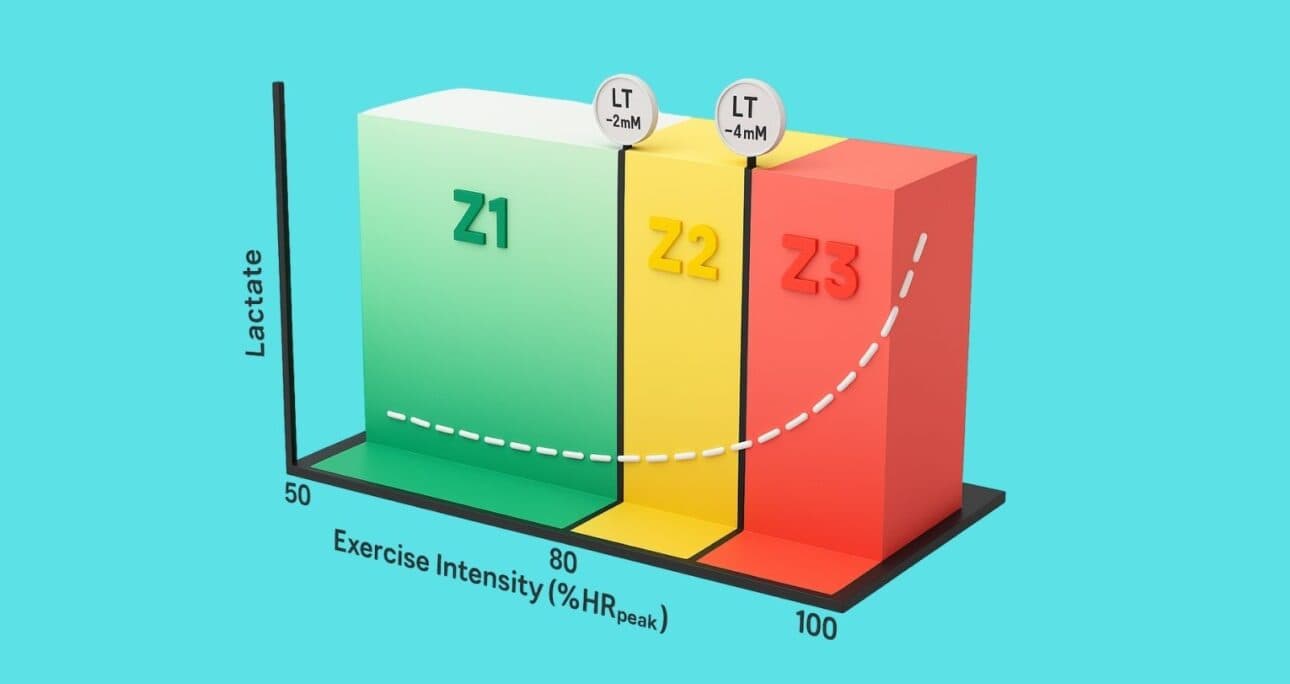
To understand why this model is effective, we must clearly define the three intensity zones based on key physiological thresholds:
Zone 1 (Low Intensity): Training intensity below the Aerobic Threshold (AeT), also known as the first lactate threshold (LT1). At this intensity, the body primarily uses fat as fuel, blood lactate levels remain stable, and athletes can comfortably hold a conversation.
Zone 2 (Moderate Intensity): Intensity between the Aerobic Threshold (LT1) and the Anaerobic Threshold (AnT)—also referred to as the second lactate threshold (LT2) or Functional Threshold Power (FTP). This is the “tempo” or “sweet spot” zone, where carbohydrate usage increases and lactate rises but remains relatively steady.
Zone 3 (High Intensity): Training intensity above the Anaerobic Threshold (LT2/FTP). In this zone, anaerobic energy systems dominate, lactate accumulates rapidly, and efforts can only be sustained for short durations.
Research by Dr. Seiler and colleagues shows that elite endurance athletes spend approximately 80% of their total training time in Zone 1 and about 20% in Zone 3, while minimizing time spent in Zone 2.
Why Is the Polarized Model Effective?
Optimizing Adaptation at the Cellular Level
Zone 1 Training (Low Intensity):
Despite its low intensity, long Zone 1 sessions are indispensable. They stimulate mitochondrial biogenesis (the cell’s energy factories), increase capillary density, enhance fat oxidation, and improve oxygen utilization efficiency. These adaptations build a powerful aerobic “engine” without placing excessive stress on the nervous and endocrine systems.Zone 3 Training (High Intensity):
High-intensity sessions are potent stimuli for increasing VO₂max, improving lactate tolerance and clearance, and enhancing neuromuscular strength and efficiency.
Avoiding the “Gray Zone”
Zone 2—or moderate-intensity training—is often described as being “too hard to be easy, but too easy to be truly hard.” Excessive training in this zone generates significant physiological stress without delivering the optimal adaptations associated with Zone 3. Over time, this can lead to chronic fatigue and reduce the quality of truly important high-intensity sessions.
Managing Training Stress and Recovery
By polarizing intensity, athletes can accumulate high training volume (primarily in Zone 1) to build aerobic capacity while remaining sufficiently fresh to execute Zone 3 sessions at the highest possible quality. This model significantly reduces the risk of overreaching and overtraining.
Comparison with Other Training Models
Threshold and Sweet Spot Training
These approaches concentrate a large portion of training time in Zone 2. They can be effective for time-crunched athletes seeking rapid improvements in FTP. However, when overused, they often lead to performance plateaus and burnout.
Pyramidal Training
This model resembles Polarized Training but includes a moderate amount of Zone 2 work. Its structure follows Zone 1 > Zone 2 > Zone 3. In practice, many elite athletes train using this approach. Polarized Training can be seen as a more extreme version of the pyramidal model, minimizing Zone 2 as much as possible.
Applying the Polarized Training Model
To apply this model successfully, athletes must adhere to two key principles:
Discipline in Easy Sessions
Zone 1 sessions must be genuinely “easy.” Athletes must resist the temptation to increase pace or power—even on climbs. As Dr. Seiler famously observed, elite athletes are willing to walk uphill to keep intensity within Zone 1. This discipline is essential for building a strong foundation without accumulating unnecessary fatigue.
Quality in Hard Sessions
On high-intensity (Zone 3) days, athletes must be physically and mentally prepared to push their limits. The foundation built through Zone 1 training ensures sufficient energy and recovery capacity to execute these sessions effectively.
Conclusion
The Polarized Training model (80/20) is not a shortcut—it is a long-term strategy grounded in robust scientific evidence. It challenges the outdated belief of “no pain, no gain.” In reality, the success of elite endurance athletes is built on hundreds of hours of low-intensity training, forming a solid base for short, high-intensity efforts.
By applying the principles of Polarized Training with discipline, you are not merely training harder—you are training smarter, optimizing adaptation and moving closer to your true potential.