
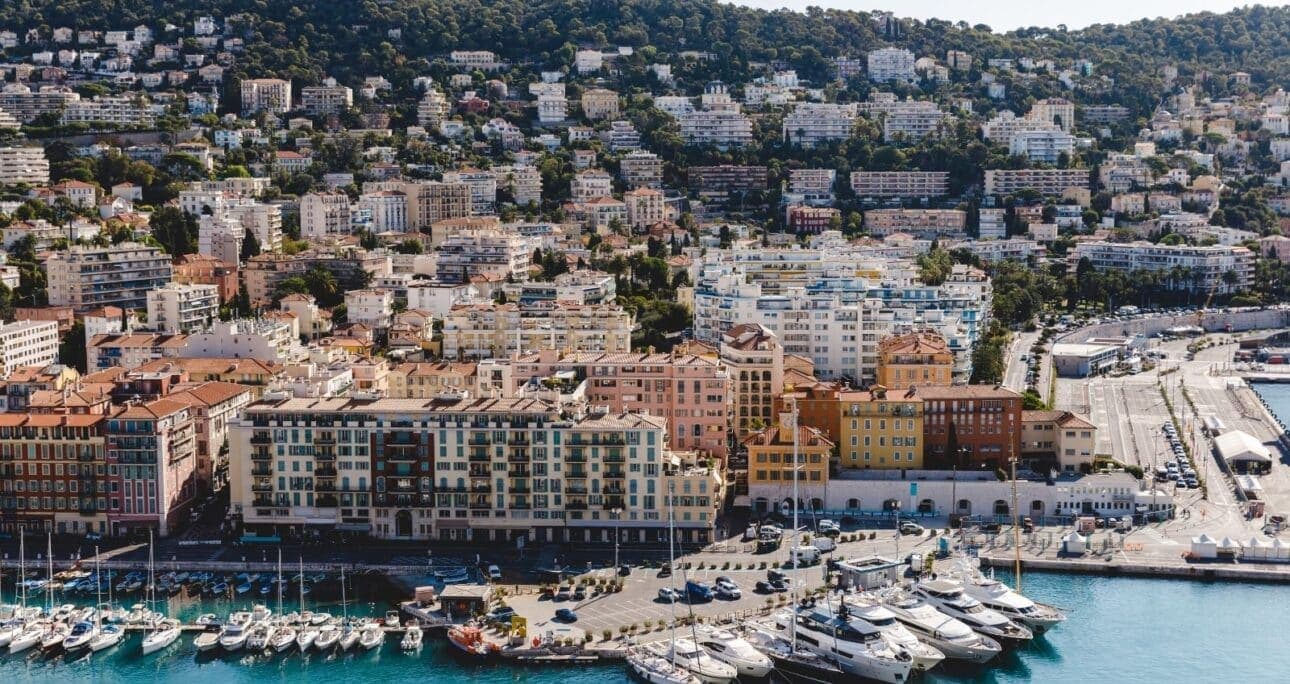
SERIES: CONQUERING NICE – IRONMAN WORLD CHAMPIONSHIP – PART 2: DECODING THE NICE ARENA
Introduction: More Than Just a Race
In the world of endurance sports, there are names that transcend the boundaries of a mere event to become icons, legends. If in running there is the Boston Marathon, in cycling there is the Tour de France, then for triathlon, the ultimate pinnacle of glory, the guiding light for athletes across the planet, is: the IRONMAN World Championship.

This is not just a race. This is a pilgrimage. It is the Everest of endurance, the ultimate destination for a journey that demands sacrifice, discipline, and an iron will. For nearly five decades, that pilgrimage has had only one destination: Kailua-Kona, Hawaii. The land of gods, of volcanic lava, and of fierce winds.
But history has turned a new page. For the first time, the torch of the men's world championship has been passed to a new land, a new challenge: Nice, France . From the humid heat of the Pacific to the majestic beauty of the Mediterranean. From the black lava fields to the powerful mountain passes of the Alps-Maritimes.
To understand the magnitude of conquering Nice, we must first understand the great heritage it inherits and the fierce battle fought just to secure a place at the starting line.
Chapter 1: The Legacy of Kona – The Forge of the Gods
Every legend has humble beginnings. IRONMAN is no exception. In 1978 on Oahu, Hawaii, Navy officer John Collins and his wife Judy proposed a crazy challenge to settle the age-old debate: who is the strongest athlete? By combining the island's three most grueling races – the Waikiki Roughwater Swim (3.8km), the Around-Oahu Bike Race (185km), and the Honolulu Marathon (42.2km) – they created a single race. John Collins famously said, "Whoever finishes first, we'll call him the Iron Man." Fifteen people started, twelve finished, and a legend was born.
But it was the move to Hawaii's Big Island in 1981 that transformed the IRONMAN World Championship into a global icon. And the moment that defined IRONMAN's "anything is possible" spirit came in 1982. College student Julie Moss, leading the race, collapsed from dehydration and exhaustion just meters from the finish line. Instead of giving up, she crawled to the finish line, astonishing millions of television viewers. That image was etched into the minds of an entire generation, transforming IRONMAN from a strength competition into a hymn to human willpower.
Kona is more than just a place. It is a living entity, an arena with a soul of its own, shaped by the harshest elements of nature:
The Pacific Unpredictable: The stunningly clear waters of Kailua Bay can turn ferocious in minutes, with unexpected currents and waves challenging even the best open-water swimmers.
“Energy Lab” and Queen K Highway: A nearly shadeless cycling and running course across pitch-black lava fields. The heat radiating from the asphalt can reach 50-60°C, draining the energy of athletes. The Energy Lab, the final leg of the race, is notorious for burying countless championship dreams due to its harshness and solitude.
Ho'omakani Winds: In Hawaiian, "Ho'omakani" means "to create wind." These are sudden, sideways winds blowing from the slopes of volcanoes down to the sea, which can reach speeds of 70-80 km/h. They not only slow down athletes, but also wear them down mentally, pushing them to the limits of their endurance.
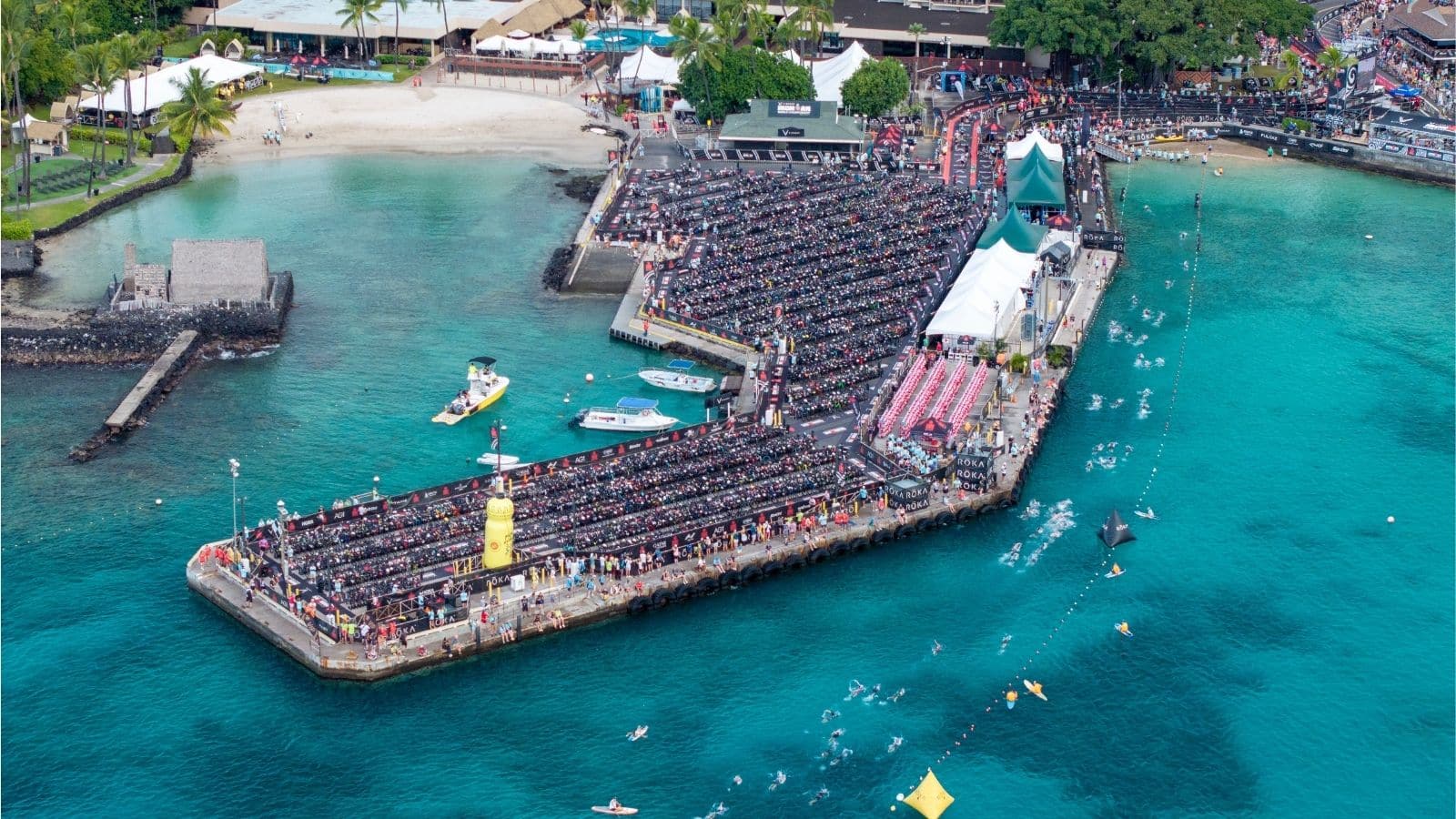
It is in this crucible that legends have been forged. From the classic 1989 "Iron War" showdown between Dave Scott and Mark Allen, the dominance of "Kona Queen" Paula Newby-Fraser, to the modern era of Jan Frodeno and Daniela Ryf. Winning in Kona requires not only the best physical condition but also an extraordinary ability to withstand pain and the harshness of the environment.
Chapter 2: A Historical Turning Point – From Kona to Nice
So why did IRONMAN decide to break a nearly 50-year tradition? The decision to alternate the men's race venue between Kona and Nice was not an easy one. It stemmed from a combination of logistical factors, the development of the sport, and a desire to create a new challenge, redefining the concept of "world champion."
Logistical Challenges: Kona is a small town. Hosting a global-scale event with nearly 5,000 athletes (men and women) and their families placed a huge burden on infrastructure, accommodation, and costs. Separating the men's and women's competitions, holding them in two different locations, helped alleviate this pressure and provided a better experience for both athletes and the local community.
A Celebration of European Roots: France is considered one of the cradles of modern triathlon. Nice has hosted the "Triathlon International de Nice" since 1982, one of the world's oldest and most prestigious triathlons. Legendary Mark Allen won here 10 times in a row before conquering Kona. Bringing the World Championships to Nice is a tribute to the history and community of European triathlon, where the sport has flourished immensely.
Creating a Whole New Challenge: This is the most compelling reason. Nice offers a completely different kind of test.
Kona is a horizontal battle: fighting against invisible forces moving horizontally – wind and heat.
Nice is a vertical battle: against a tangible force – gravity. The race in Nice takes place on the mountainous terrain of the Alpes-Maritimes region, with a total elevation gain of approximately 2400m . This raises a fascinating question: Who is truly the world's most well-rounded triathlete? Who can win on both of these distinct types of terrain?
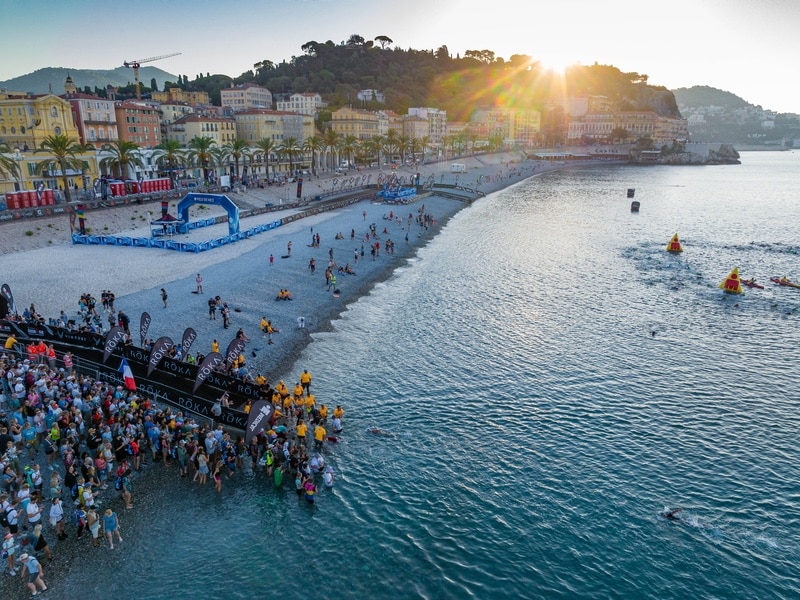
Drone views of the 2023 Men's VinFast IRONMAN World Championship in Nice, September 10th, 2023.
Chapter 3: “By Qualification Only” – The Battle for Tickets
Standing at the starting line in Nice isn't a privilege; it's a special treatment earned through blood, sweat, and tears. Unlike major marathons where you can register via lottery, the IRONMAN World Championship can only be reached through one route: Qualification.
This system is designed to ensure that only about 2000 age-group athletes and 100 of the best professional athletes on the planet are included.
Slot System: Each official IRONMAN race worldwide is allocated a certain number of slots to Nice. These slots are divided among different age groups based on the number of registered athletes in that age group. The larger the age group, the more slots it receives.
The competition: To earn a spot, an athlete doesn't just need to finish the race. They have to be among the top in their age group. For example, in an age group of 200 male athletes aged 40-44 with only 3 spots, you have to be one of the 3 fastest. This creates a "race within a race," where competition can be fierce down to the second. A small mistake in nutrition, a technical error, or a wrong decision about pace can cost you a year of training.
The "Roll Down" ceremony is full of emotion: Immediately after the race ends, the selection ceremony takes place. The top-ranked athletes will be called out. If they decline, their spot will be "rolled down" to the next person in line. This is a dramatic moment where a person's dream can become a reality in just a few seconds.
This battle for a spot means that every athlete starting in Nice is a champion in their age group at some race somewhere in the world. They have demonstrated dedication, talent, and extraordinary willpower just to have the chance to compete.
Chapter 4: The Stature of a New World Champion
Conquering Nice demands a completely different set of skills. A champion in Nice needs not only a massive aerobic engine, but also a mastery of technique and tactics.
Kona athletes are typically those capable of maintaining an extremely stable power output for extended periods (very low VI – Variability Index), and can effectively withstand wind and temperature changes. The determining factors are raw watts and aerodynamics .
Nice's athlete: He needs to be a more well-rounded athlete. The deciding factors are power-to-weight ratio (W/kg) and bike handling skills . They need:
Climbing Strength: The ability to produce high W/kg (w/kg) over a long period of time.
Descending Skills: The courage and skill to handle a bicycle at high speeds on winding roads. A good descending can save minutes and a lot of energy.
Pacing Strategy: Knowing when to push forward and when to recover. Their VI (Visual Value) will certainly be much higher than Kona's.
Muscle Endurance: Your legs must be strong enough to run a marathon after being "ravaged" by a 2400m mountain climb, especially your quadriceps.
Winning in Nice would redefine the definition of a world champion. It's not just about aerobic power, but also about the perfect combination of strength, skill, and tactical intelligence.
In short:
The journey to Nice is a double whammy: a journey to overcome thousands of rivals for a coveted spot, and a journey to prepare for one of the most demanding sporting challenges. It celebrates Kona's heritage but also opens a new, challenging, and exciting chapter.
In the next article, we will delve into the "battlefield": a detailed analysis of every meter of the swimming, cycling, and running course in Nice , to see clearly what awaits our warriors on September 14, 2025.