
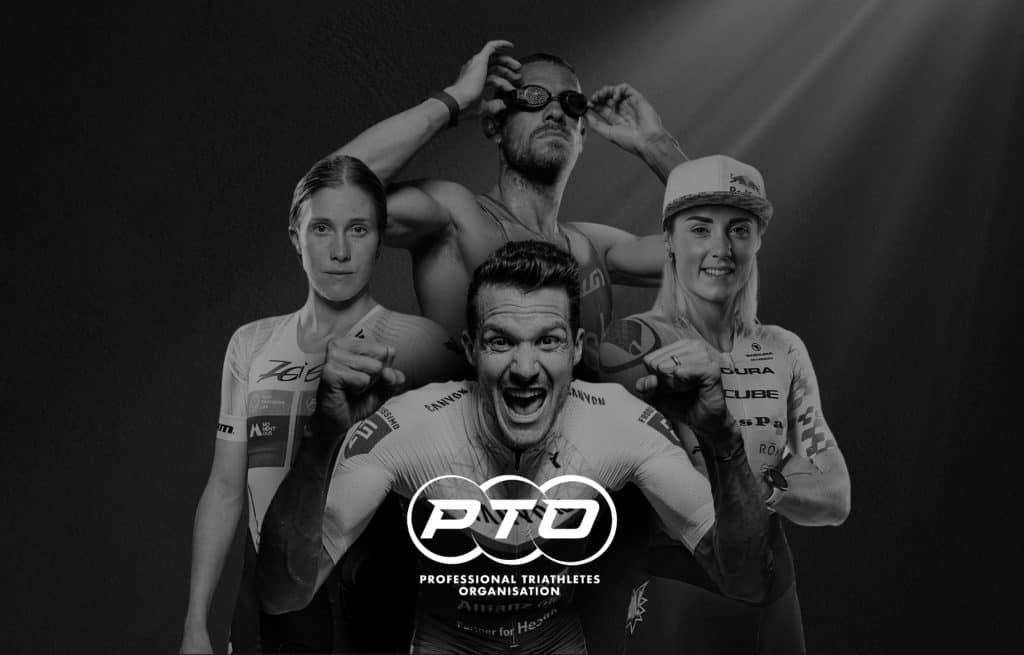
Triathlon Empires – Part III: PTO – The Uprising of the Athletes
Look at a professional triathlete at the finish line. They are a sculpture of physicality and willpower. A perfect biological machine capable of pushing the limits of human endurance. On the racecourse, they are gods, stars of a multi-hour show, drawing thousands of fans and generating millions of dollars in revenue for race organizers.
But behind that glory lies a harsh reality. For years, most of these stars faced another battle—silent and relentless: the financial struggle. They are the soul of the races, yet they don’t own the stage. They are the reason audiences watch, but they only receive a small piece of the massive profit pie.
What happens when these stars decide they don’t just want to perform, but also want to direct their own show? What happens when the world’s top athletes come together and say: “It’s time to change the game”?
This is the story of the birth of PTO (Professional Triathletes Organisation)—a rebellion, a bold gamble, and one of the most fascinating experiments in modern sports history.
Chapter 1: Background – The Smoldering “Discontent”
To understand why PTO was created, we need to look at professional triathlon in the 2010s. The long-distance world was almost entirely dominated by the Ironman brand. While professional athletes were vital to the appeal of these races, they faced a series of persistent struggles:
Stagnant prize money: While travel, accommodation, and training costs rose, total prize purses at many Ironman races remained nearly unchanged for years. For athletes outside the top 5, pursuing a professional career was a real financial struggle.
Complex ranking system: The Kona Pro Ranking (KPR) system for qualifying for the World Championship was complicated and sometimes opaque. Athletes had to compete in a dense schedule worldwide to “chase points,” often leading to burnout and injury.
Lack of collective voice: Unlike tennis (ATP/WTA) or golf (PGA/LPGA), triathletes lacked a strong association to protect their rights and negotiate with organizers. They were independent contractors, fighting their battles alone.
Many past attempts to create a athletes’ association failed due to the individualistic nature of the sport and lack of sufficient resources to enact change.
Then came a turning point. A group of veteran athletes, together with entrepreneur and investor Charles Adamo, devised a different plan. Their goal was not just to create an association to “claim rights.” Their plan was to create a new business, a media powerhouse capable of organizing events and reshaping the market. This vision received massive backing from Sir Michael Moritz, a Welsh billionaire investor who saw untapped potential in professional triathlon.
With clear vision and substantial capital, PTO was no longer a dream. It became a force ready for disruption.
Chapter 2: The Birth of PTO – The Game-Changer
PTO was established with a unique model in the sports world: it is co-owned by professional athletes themselves. For the first time, the success of the organization was directly tied to the success of its athletes. They were no longer employees; they were owners.
The PTO’s mission was clear and ambitious:
Celebrate and promote professional athletes, turning them into stars recognized by the general public.
Significantly increase athlete earnings through a transparent prize and ranking system.
Develop triathlon as a TV-friendly sport, attracting new fans.
They didn’t just talk—they acted. One of their first groundbreaking moves was the introduction of the PTO World Ranking, with large end-of-year payouts for top athletes.
But their boldest statement came in December 2020. Amid the global pandemic, PTO partnered with Challenge Family to host the 2020 PTO Championship at Daytona. With a total prize purse of $1.15 million—the largest ever for a single race—it attracted nearly all the world’s top athletes.
More importantly, the event was produced at premium television quality, focusing on storytelling, deep analysis, and engaging graphics. It wasn’t just a race—it was a show. PTO proved they not only had money, but a vision for turning triathlon into an entertaining and compelling product. The game had truly changed.
Chapter 3: Redefining the Game – Collins Cup and the T100 Tour
Following their impressive debut, PTO continued to launch innovative products to reshape the sport:
Collins Cup (2021): “The Ryder Cup of Triathlon”
Inspired by the legendary Ryder Cup in golf, PTO created the Collins Cup. A completely new format: a three-team showdown—Team USA, Team Europe, and Team International. Each team consists of 12 top athletes, led by captains who are legends like Mark Allen, Dave Scott, and Chrissie Wellington.
Athletes compete in triple match-ups (one from each team) to score points for their team. Collins Cup brought long-missing elements to long-distance triathlon: team spirit, national pride, and direct competition drama. It created compelling stories beyond individual races.
The Evolution into T100 World Tour
After Collins Cup and individual Open events, PTO realized they needed a year-round tour to create a season-long narrative. Thus, the T100 Triathlon World Tour was born.
The 100 km distance (2 km swim, 80 km bike, 18 km run) was chosen as a “sweet spot”: long enough to test endurance, but short enough to maintain speed and drama for TV.
The T100 model drew inspiration from successful global sports like Formula 1 and tennis. PTO contracted 20 top male and 20 top female athletes, who commit to competing in 8 races worldwide. Athletes earn points, and a T100 World Champion is crowned at season’s end, with total prize money of $7 million.
PTO also strengthened its media strategy, streaming races live and free on global platforms. Their goal: not only serve the existing triathlon community but also tell the stories of these “super athletes” to a broader audience.
Conclusion: An Uncertain but Promising Future
The rise of PTO is one of the most compelling stories in modern triathlon. In just a few short years, they shook a world dominated by a few “giants.” They forced the entire industry to rethink prize money, athlete recognition, and fan engagement.
Of course, challenges remain. Can PTO’s business model sustain long-term? Can they attract the mainstream audience they aim for? The competition for market share with established “empires” is fierce.
But one thing is certain: PTO has brought fresh energy, excitement, and drama. For triathlon fans, this is a golden era. We witness elite matchups nearly every month and gain deeper insight into athletes’ stories.
At Gopeaks, we believe competition and innovation drive progress. The professional athletes’ uprising through PTO not only benefits them but also makes triathlon more engaging and inspiring for all. The epic of triathlon still has many thrilling chapters ahead, and PTO will surely be one of the central figures in this story.