
Preventing Endurance Sports Injuries – Part 2: Proprioception
What is proprioception and why should endurance athletes care about it?
In Episode 1 , we discussed RFD (Rate of Force Development) – the speed of force generation. This is a factor that helps the body react quickly, stabilize joints, and reduce the risk of injury.
However, quick reaction time alone isn't enough. To generate force accurately, the body needs an "internal navigation system" to know its position, the angle at which the knee is rotating, and how the foot is landing. That system is proprioception . And here's its benefit to endurance sports:
Running: helps you know whether your foot is touching the ground on the ball, heel, or midfoot without having to look down.
Cycling: helps you maintain a steady pedaling rhythm even without looking at your feet.
Swimming: helps you feel the correct angle of your arm strokes in the water and keep your body aligned.
In other words: Proprioception = The sixth sense of an endurance athlete.
Why is proprioception important in preventing endurance sports injuries?
Injuries in endurance sports are often due to overuse or loss of balance in unexpected situations . Good proprioception significantly reduces this risk.
1. Prevent ankle sprains and knee pain while running.
With each step, a force 2–3 times the body weight is concentrated on the feet and knees.
If proprioception is weak → muscles react slowly → ankle or knee joint becomes dislocated → leading to sprains, ITB syndrome, or runner's knee.
2. Stabilize your hips and spine while cycling.
When cycling long distances, thousands of continuous pedal strokes require stability in the hip and lower back joints.
Good proprioception helps maintain proper posture, reducing the risk of lower back injuries or hip pain.
3. Improve balance reflexes when fatigued.
At the end of a long run, muscles are fatigued, proprioception decreases → making it easier to stumble and get injured → those who are well-trained will maintain consistency for longer.
4. Reduces the risk of injury from uneven road surfaces.
Trail running, mountain climbing, or uphill activities always carry the risk of spraining your ankle.
Good proprioception helps the feet "read" the road surface quickly and adjust instantly.
5. Faster recovery from injury
After a ligament tear or sprain, proprioception is often impaired → rebuilding and strengthening this element is key in recovery to prevent recurrence of the injury.
Physiological mechanism: How does proprioception work?
The sense of self comes from the neural receptor system :
Muscle spindle: feel the tension and changes in muscle length.
Golgi tendon organ (GTO): measures tendon tension.
Joint receptor: senses joint rotation angle.
Cutaneous receptor: senses pressure and vibrations on the skin.
All this information is sent to the central nervous system → processed in the brain → commands are transmitted to the muscles → force and direction of movement are adjusted immediately.
If proprioception is weak, the brain doesn't have time to "read" the signals → joints become loose, reactions are slow → injury is more likely.
How does proprioception differ from RFD?
Element | RFD (Speed of Force Delivery) | Proprioception (Soul Sensation) |
|---|---|---|
Define | Speed of force generation in a short period of time | The ability to sense body position and movement. |
Relate to | The nervous system, explosive power. | Nerve receptors, balance reflex |
Application | Sports require quick reflexes and physical contact. | Endurance sports, recovery, long-distance running |
Limit | Does not reflect the sense of balance. | Maximum power is not specified. |
These two factors complement each other: having proprioception but poor RFD leads to a slow response. Having fast RFD but poor proprioception leads to a misdirected response.
Exercises to improve proprioception for runners.
This article will focus on running – a sport with a high and very specific injury rate. To improve proprioception, it is necessary to train balance, body control, and reflexes . The following are groups of exercises:
1. Single-Leg Balance (Standing on one leg)
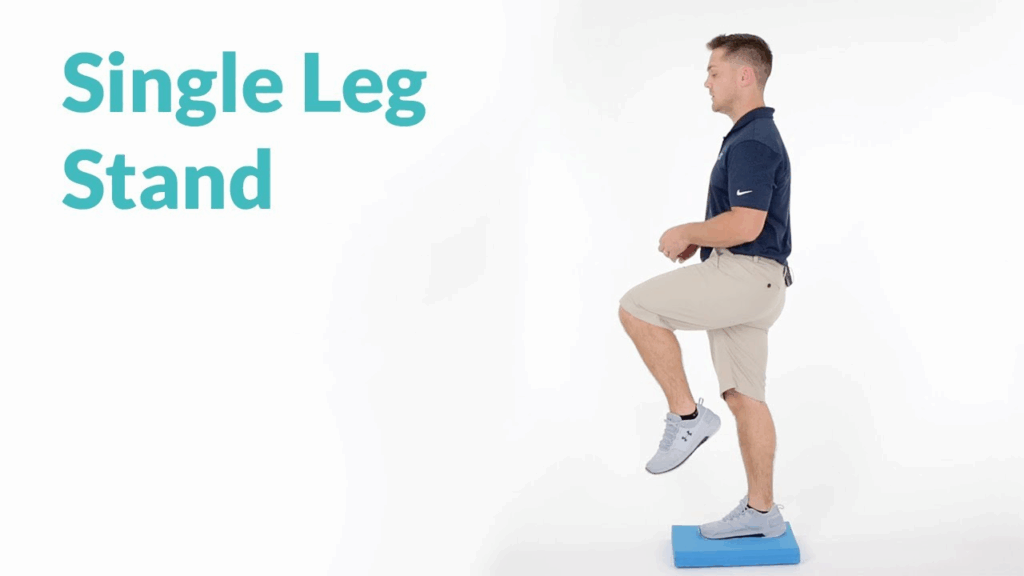
Single-leg stands are a simple exercise that helps runners maintain balance and protect their joints during long-distance runs. Source: Vive Health
Stand on one leg, hold for 30–60 seconds.
Increase the difficulty: close your eyes and stand on a soft surface (BOSU ball, foam pad).
Effect: Improves balance while running.
2. Single-Leg Hop
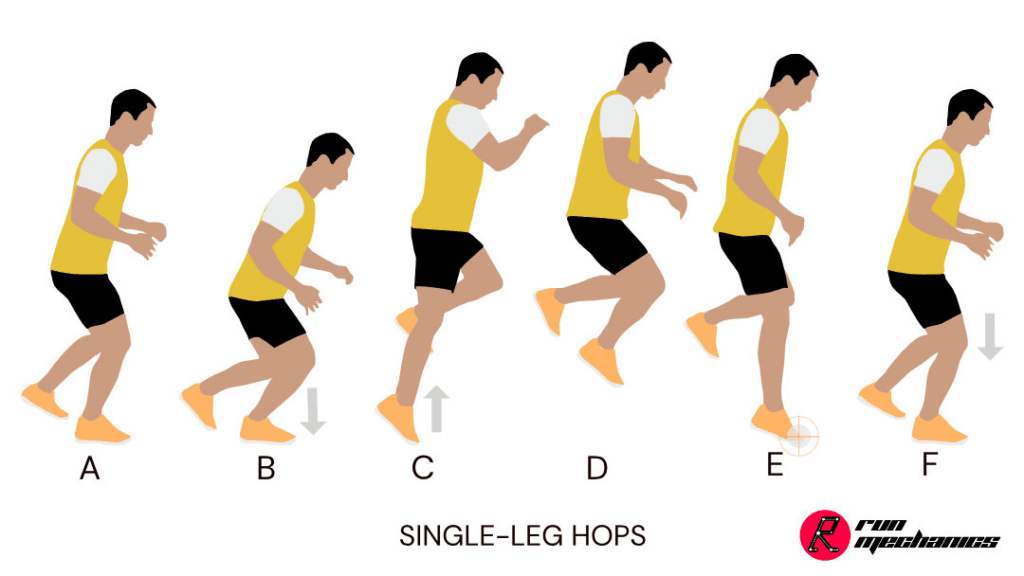
Single-leg hops are a one-leg balance exercise that helps reduce the risk of injury during long runs. Source: geeksonfeet.com
Jump forward or sideways on one leg, maintaining balance upon landing.
Function: Simulates reflexes when running or tripping.
3. Ladder Drills
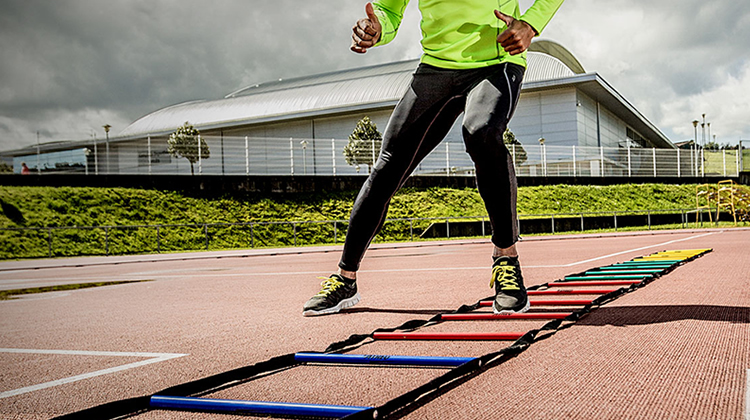
Ladder drills are an exercise that helps runners improve balance and reduce the risk of injury. Source: horshamathletic.com
Moving quickly across the rope ladder: in-out, lateral shuffle, carioca.
Effect: Improves foot proprioception, helping to prevent ankle injuries.
4. Dynamic Balance with the ball
Stand on one leg, pass the ball back and forth with a teammate, or throw the ball against a wall.
Effect: combines proprioception and reflexes.
Incorporate proprioception into your endurance training program.
Warm-up: 5 minutes of drill (balance, hop) before running/cycling.
Strength training: Add 1–2 proprioception exercises to your weight training day.
Rehab/Recovery: using proprioception as part of the recovery process after injury.
Progressive overload: gradually increasing difficulty (eyes closed, unstable surface, additional coordination movements).
With just 10–15 minutes per session, 2–3 sessions per week , proprioception will improve significantly.
Conclude
Proprioception = The sixth sense of endurance athletes helps: maintain balance, stabilize joints, reduce overuse injuries, and speed up recovery from injuries.
Ignoring this factor, you might run faster, but you'll also be more prone to injury.
If you're a runner, cyclist, or triathlete, don't just focus on endurance and strength. Add proprioception training to your program to run further, safer, and more sustainably .