
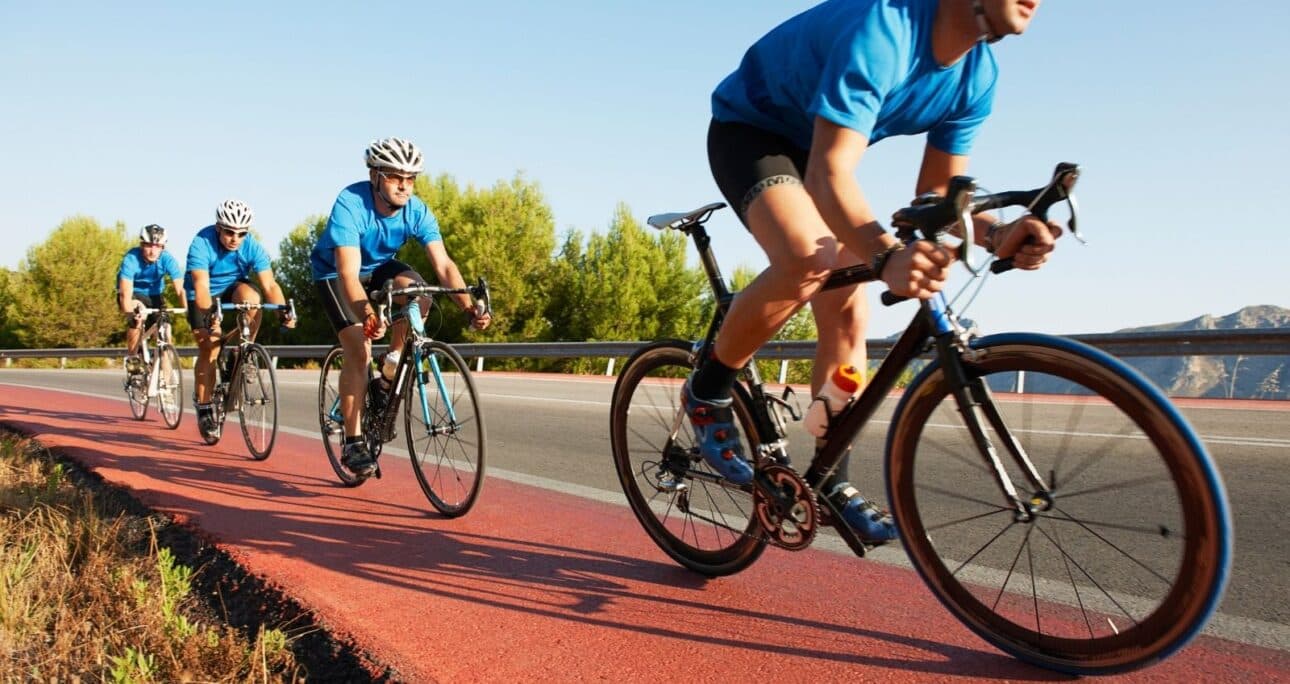
Drafting at Trifactor Can Gio: When is it "Smart," and when is it "Cheating"? – A Guide to Rules & Tactics in Competition
Welcome back, warriors, to Gopeaks Magazine!
As the starting line draws closer, there's another "chess game" every athlete must master: the game of rules and tactics . Especially on the flat, windy cycling route of Can Gio, a perennial question arises, sparking countless debates: Drafting.
Is drafting a foul? Or is it a clever tactic? The answer is: Both, depending on the distance you're competing in. Misunderstanding it can not only lead to unfair penalties but also cause you to waste energy unnecessarily.
This article, based on the official regulations of Trifactor Vietnam, will clearly explain the rules of the game and delve into competition strategies so you can be confident, smart, and strong on race day.
Law of Drifting: Clearly Distinguishing Between Distances
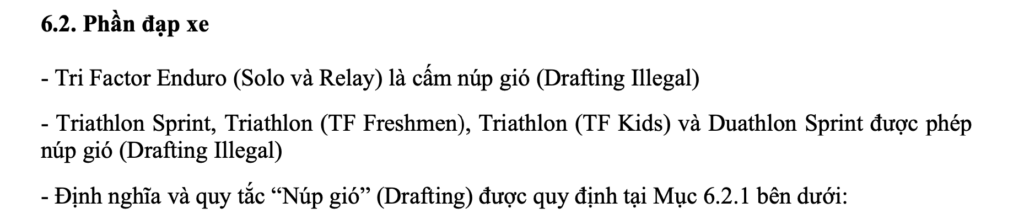
This is the most important part you need to understand. Trifactor Vietnam applies two different sets of laws.
Long Distance (Enduro & Standard) – “NON-DRAFTING” RULE (NO DRAFTING)
Essentially: A pure test of your own strength and willpower.
Rules: The draft zone is a 12-meter- long rectangle . You are NOT allowed to enter another athlete's draft zone. When you want to overtake, you have 25 seconds to complete the overtaking maneuver. The athlete being overtaken is responsible for proactively moving back out of the draft zone.
Penalty: Receive a Blue Card and a 2-minute (Enduro) or 1-minute (Standard) stop at the Penalty Tent.
Short Distance (Sprint & Super Sprint) – “DRAFT-LEGAL” RULE (Allows sheltering from the wind)
The essence: Transforming the cycling race into a tactical road race where teamwork skills are highly valued.
Rule: You are allowed to draft behind athletes of the same gender.
Tactical Chess: How to Play "Non-Drafting" and "Draft-Legal" Games?
Understanding the rules is one thing, but applying them as a strategy is an art.
Non-Drafting Tactics: A Race Against Yourself
This is a massive Time Trial (TT) race. Your goal isn't to "race" against the person next to you, but to complete the leg of the race with the highest possible average power while still conserving enough energy for the rest of the race.
Pacing discipline is king: Trust your watch (power meter, heart rate monitor). Stick to your endurance limits (Zone 2 – Zone 3). Don't get caught up in the pace of others in the first few kilometers.
Overtake decisively: When deciding to overtake, accelerate strongly and complete the overtake within 25 seconds. Don't hesitate in the draft zone; the referee won't let you off the hook.
Mental strength: Prepare yourself mentally for cycling alone for extended periods. This is a battle of willpower.
Draft-Legal Tactics: The Dance of Speed
This is a completely different kind of race, requiring agility and masterful vehicle handling skills.
Swimming is key: A good swimming section will help you get off to a strong start in the cycling race. This is crucial.
Energy conservation: Learn how to safely "drift" within a group to save up to 30% of your energy. Let the stronger members carry the group.
Always be prepared for Surges: Draft-legal teams often accelerate suddenly when exiting corners or navigating short ramps. Stay alert to avoid falling behind the group.
Communication: Use hand signals and verbal communication to communicate with other athletes in the group about obstacles ahead.
The “Red Lines”: All the Important Prohibitions You Need to Avoid
Besides drafting, these are other mistakes that can result in a penalty or even disqualification (DQ).
Regarding Equipment
Headphones, mobile phones , or any personal entertainment devices are prohibited.
Non-standard bicycles (e.g., recumbent bikes, bikes without brakes) are prohibited.
The use of glass water bottles is prohibited.
Wetsuit (thermal swimsuit): Details will be announced on race day. Water temperatures in Vietnam are usually quite high, so it's possible we won't be allowed to wear a wetsuit.
Regarding Conduct on the Race Track
Outside Assistance is prohibited: You are not allowed to accept food, drinks, or technical assistance from friends or family members along the way. All supplies must come from the Organizing Committee.
Pacer is prohibited: You are not allowed to have a non-competitor (non-participant) running/cycling alongside you to provide speed or moral support.
No undressing or changing clothes in public: Any act of changing clothing must be done discreetly in the transition area or changing tents.
Always wear the swimming cap provided by the organizers.
Penalty Card System & Transition Zone "Traps"
Blue Card: A stop penalty for the "Drafting" violation (lurking behind other vehicles).
Yellow Card: A stop-and-go penalty for other offenses (e.g., obstruction, littering).
Red Card: Disqualification from the race (DQ) for serious fouls.
"Transition traps":
The helmet must be fastened BEFORE you touch the vehicle.
You are only allowed to board the bus AFTER the “Mount Line” and must alight BEFORE the “Dismount Line”.
Conclusion: Understanding the Rules to Compete Smarter
Mastering the rules isn't about competing in fear. On the contrary, it frees your mind from unnecessary worries, allowing you to focus 100% on executing tactics and listening to your body.
A professional athlete is not only physically strong, but also knowledgeable about the rules of the game. Respect the race, respect your competitors, and respect yourself by competing fairly. A final piece of advice from Gopeaks: take the time to read the organizer's rules and regulations at least twice to avoid any surprises on race day.
Wishing you a strong, safe, and proud race at Trifactor Can Gio!