
History of Triathlon Races in Vietnam – Part 1: TriFactor Can Gio
A community-built "playground" – A 10-year journey: from seed to forest.
Do you remember that morning in Da Nang in 2015 when IRONMAN 70.3 first arrived in Vietnam? For many, triathlon at that time seemed like a three-headed "monster"—swimming, cycling, and running—long, exhausting, and somewhat impossible. But the seed was sown. From that seed, over the past ten years, triathlon in Vietnam has grown through thousands of early mornings: swimming lanes opened at dawn, routes were safely secured, and volunteers offered cups of water and smiles. From a single international race, we have gained more "playgrounds" with their own unique characteristics: a picturesque 70.3 in Phu Quoc, a sun-drenched, wind-sloping FesTRIval in Bau Trang, and now a cozy, intimate TriFactor Can Gio, nestled in the "green lung" of Saigon.
The flow of ten years—not a straight line, but an exponential increase in emotions.
2015 : 70.3 Da Nang opened its first door to the world.
2019 : Hosting the Asia-Pacific Championship — Vietnam's name is prominently displayed on the regional map.
2023 : Launch of 70.3 Phu Quoc and Vietnam Festival — a movement suddenly becoming multi-point, multi-experience.
2024 : The Vietnam Triathlon Federation (VTF) is established—a milestone in the organization, profoundly changing the ecosystem.
2024 : TriFactor Kids Vietnam in Can Gio for the first time—passing the torch to little feet.
2025 : 10 years of 70.3 Da Nang — a decade of perseverance and growth.
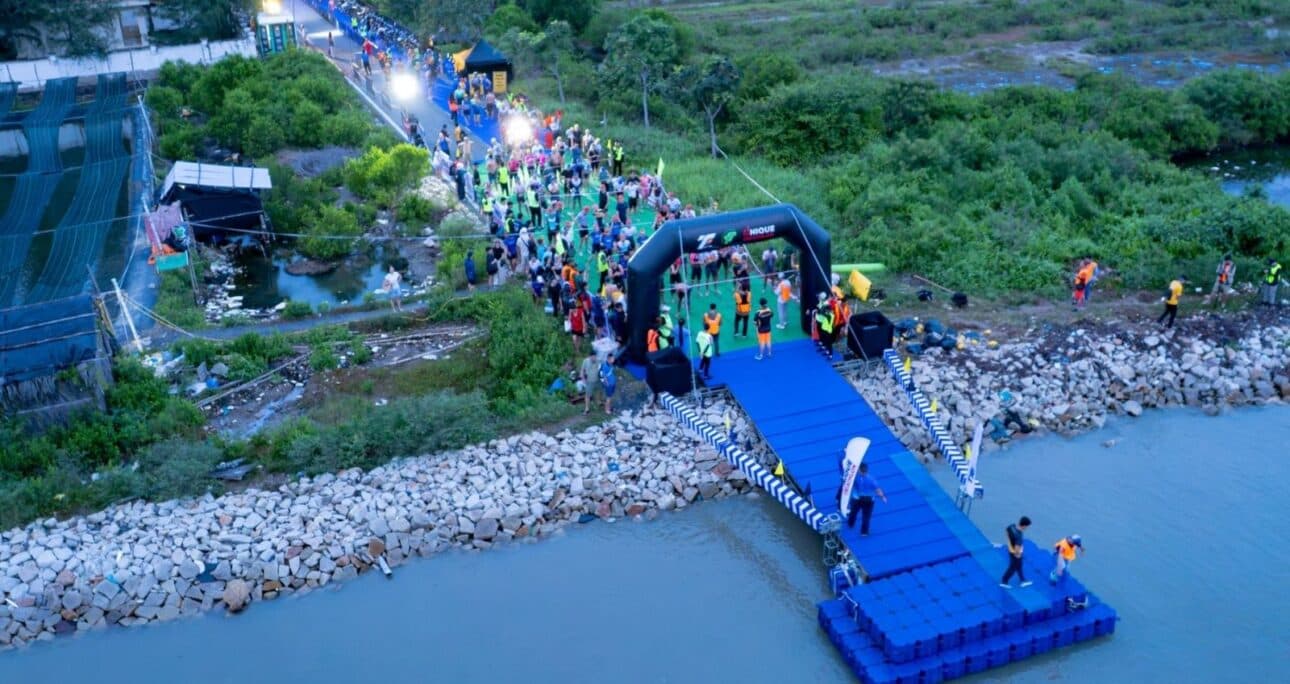
In that picture, TriFactor Can Gio stands out as a “community playground”—with many categories for all ages, designed to give newcomers a chance to enter while still providing a worthy challenge for seasoned participants. What I love about this competition is its location: in the middle of the Can Gio Mangrove Biosphere Reserve —a living, breathing, and… smelling very “authentic” ecosystem.
TriFactor Can Gio – “a playground amidst the mangrove forest”
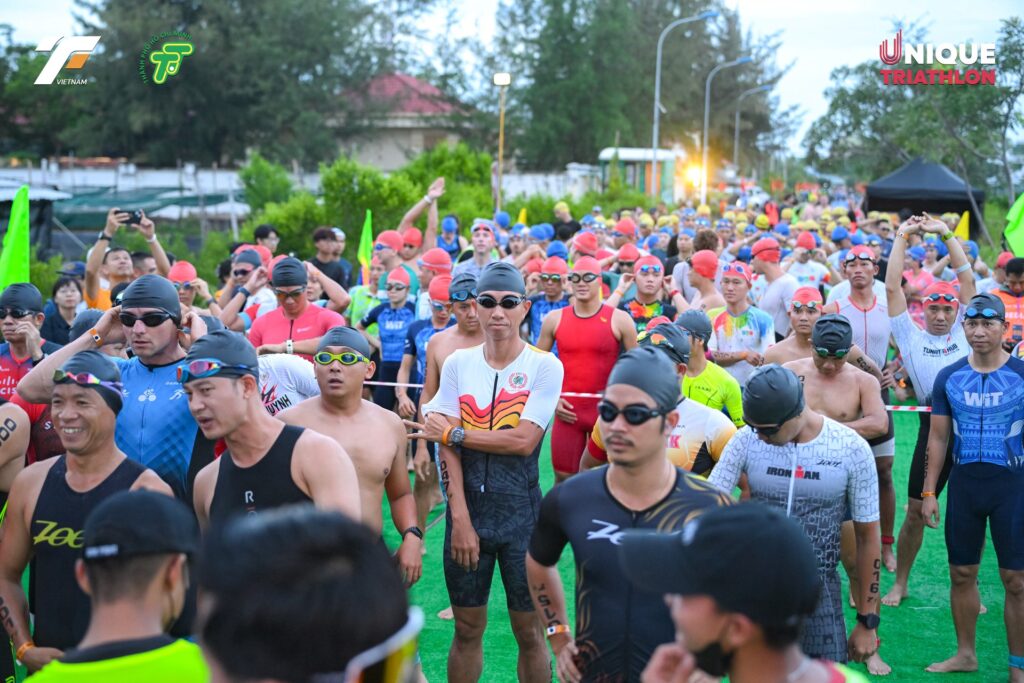
Context & Identity. Can Gio carries the salty taste of the sea breeze, the rhythmic ebb and flow of the tides, and sometimes the pungent smell of silt—signs of a thriving ecosystem. Here, the swimming lanes aren't "sterile" like lakes; the cycling paths aren't straight highways; and the running tracks aren't cool boulevards where you can automatically assume a negative split. Every kilometer truly "has a life of its own." Therefore, the moment you cross the finish line becomes even more valuable.
The overarching philosophy. TriFactor originated in Singapore in 2009, with a philosophy of opening multiple "doors"—Kids , Freshmen, Sprint, Enduro —so that everyone has a way in. When it came to Vietnam, that philosophy was "translated" in a very Vietnamese tone: families go together, clubs compete together, and race day becomes a community festival .
Key race structure and distances.
Enduro (Solo/Relay) : Swim 2.25 km – Cycle 80 km – Run 20 km — a distance that's challenging enough while still maintaining a fun rhythm.
Kids & Extended Age Groups : A fertile ground for children's curiosity and courage.
Time and location : August 15–17 , in Can Thanh town, Can Gio district, Ho Chi Minh City — close to Saigon but feels like a "far away" trip.
"Decoding the TriFactor 'specialty': when challenges are part of the experience"
Some people were dissatisfied with the recent race: the seawater smelled bad , there were many pontoon bridge climbs , and the course had many curves . I understand. We all "wish" for a smooth course like in the advertisements. But triathlon is an outdoor sport ; and outdoors, nature is the judge . Instead of seeing those elements as "flaws," I choose to see them as specialties —like fish sauce or durian: not everyone will love them immediately, but once you understand them, you'll feel proud.
1) "The smell of the sea" – the scent of a living ecosystem
In the estuary-mangrove zone, the water carries silt, algae, and organic matter. The "smell" you perceive is evidence of life, not a coincidence. Technically, this is a psychological exercise : maintaining a steady breathing rhythm, sighting at high points, and avoiding abrupt changes in rhythm due to sensory stimuli. You are swimming in a "natural laboratory" rarely open to the public—and you are one of the few present.
2) Floating bridge – rhythmic and safety exercise
The rocking motion of the inflatable bridge breaks the swimming rhythm into small segments, creating natural micro-rests : the heart rate slows slightly, posture changes, the core muscles are activated, and then the swimmer plunges back into the water. For beginners, the inflatable bridge is a safe place to hold on to, adjust goggles, and regain composure. Consider the data: many swimmers become more stable after each in-flight exercise because their mindset is "reset" at the right time.
3) Many curves – the family grandstand and a technical lesson
I stood at the intersection where parents, friends, and teammates could see their athlete four or five times without having to run around. Each well-timed call to action gave you a few extra watts of morale. From a technical standpoint, corners are a lab for honing your line, braking, entering, and exiting in rhythm, handling crosswinds, and then increasing your pedaling speed by three to five revolutions to regain momentum. Without corners, you lose half the lesson of road cycling.
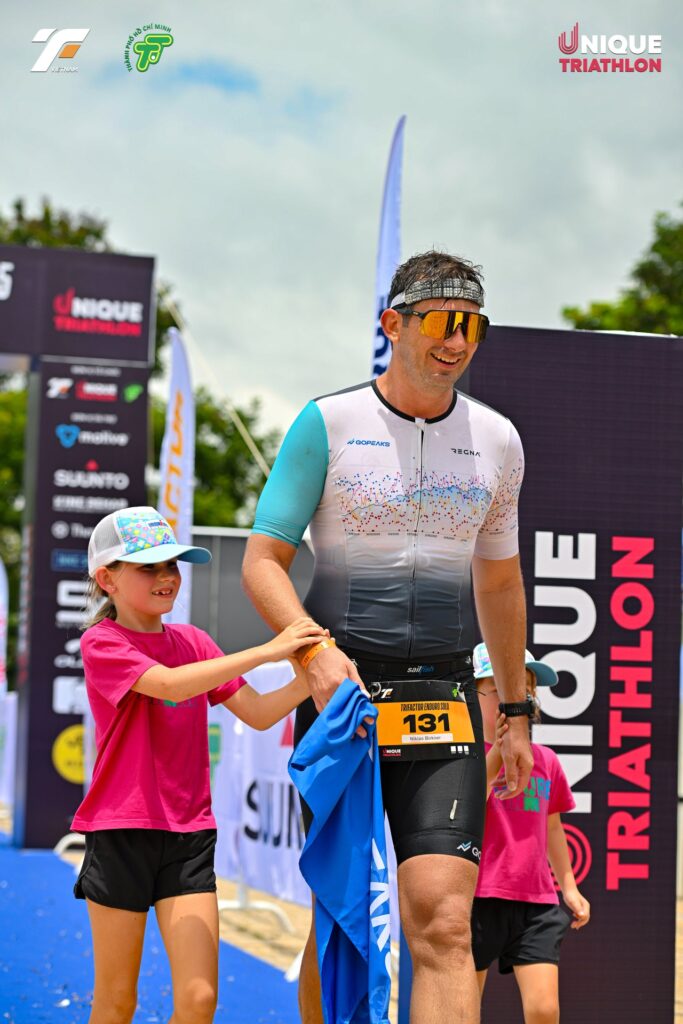
In short : if we consider "the smell of the sea - the floating bridge - the sharp turns" as part of the game , we will have more fun, be stronger, and remember it longer.
What has the world taught us about harsh realities?
The most coveted triathlons are often the least enjoyable:
Norseman (Norway) : Starting with a jump from a ferry into a frigid fjord, cycling and running over mountains, and finishing atop Gaustatoppen. There, safety is elevated to a cultural norm , with research teams monitoring the athletes' physiology right on the race course.
Patagonman (Chile) : Ferry jumping at dawn , stinging Patagonian winds, a point-to-point race requiring a high level of organization and logistical self-sufficiency.
Alpe d'Huez (France) : 21 legendary hairpin bends—you don't come here for PR, you come to conquer the icon .
SWISSMA N (Switzerland) : Full-distance trek across three Alps mountain passes, minimal logistics, destination at the foot of Eiger–Mönch–Jungfrau—brutally beautiful.
Challenge Roth (Germany) : 7,500 volunteers transformed a small town into an emotional capital—a model of "community-made legends".
We respect these competitions not because they are "smooth," but because they are true to the terrain, climate, and culture —while still ensuring safety and fairness. TriFactor Can Gio follows that spirit: preserving the natural beauty of the mangrove forest, sea breeze, and currents; and the organizing committee's role is to coordinate everything to ensure order .
The unsung heroes and the "getting things done" spirit
I've been to James 's race many times. Watching him and his team work, I saw a logistical "symphony": multiple distances and age groups simultaneously , including Kids ; then security, medical services , rescue, volunteers; and traffic management in a unique area like Can Gio. It's a challenge that requires discipline, meticulousness, and composure . What I appreciate most is how they built the race on a community foundation : working closely with the local community, mobilizing local forces, and calling on clubs to become "extended arms." Without loud slogans, they let the race speak for itself .
And there's this: every corner is a grandstand . At the intersections, parents, friends, and teammates can see their athlete many times. Children stand in the sun, waving to their parents; friends call out each other's names; teammates remind each other to keep the rhythm. For an athlete, sometimes a well-timed call can change the entire race.
Vietnamese Triathlon—how will it move forward?
When asked, "Why did I get into triathlon?", few would answer, "Because the race course has to look like the advertisement." We get into it for the experience : the experience of growing, the experience of bonding, the experience of crossing the finish line and knowing that there were hands that stepped back so we could move forward. Those hands are the organizers , volunteers , security, medical, and rescue personnel . They are the people who pick up the trash after we return to the hotel, the people who remove the barriers after we've boarded the bike.
I hope the athletes, especially those who are still dissatisfied, will try to change their perspective : the smell of the water, the pontoon bridge, the corners… are not faults ; they are the elements that make up Vietnam's racing memories. Just as the world respects Norseman for his jump into the icy fjord; loves Patagonman for the Patagonian wind; adores Alpe d'Huez for its 21 corners; admires SWISSMAN for his three Alpine passes; and is moved by Roth for his 7,500 volunteers. We have Can Gio —another “specialty,” not without challenges, but warmed by the community.
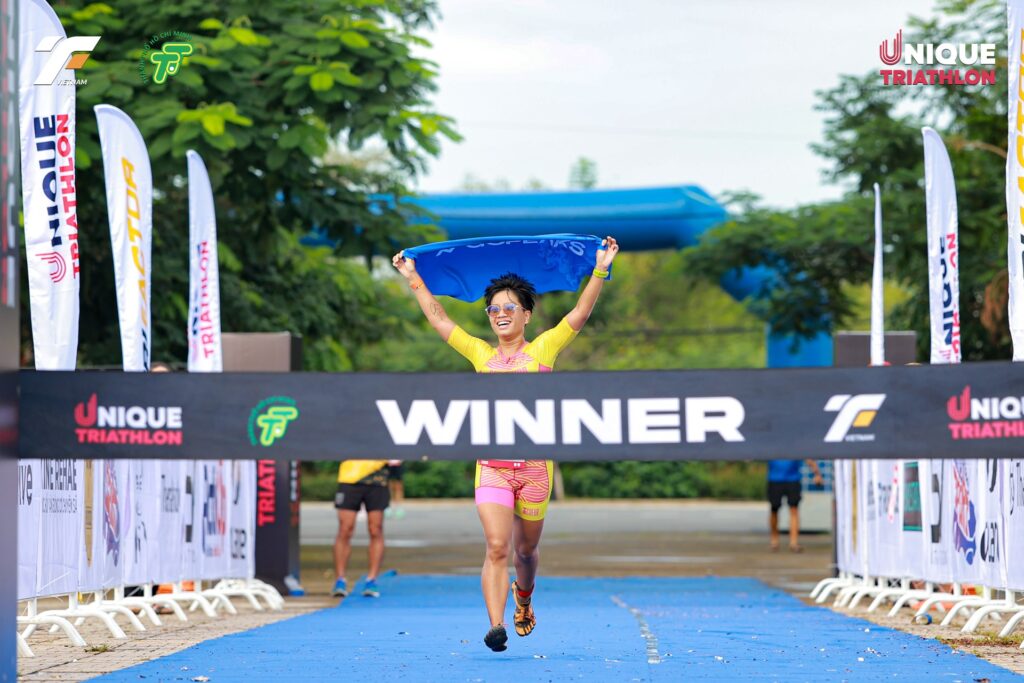
In conclusion – Let's create a playground together.
After all, why do we get into triathlon? Not just to have a great pace or power, not just to win another medal. Deeper, we seek experiences that push our limits , a connection with nature, with like-minded people, and with a stronger version of ourselves.
A competition with challenges from nature is not a failure. On the contrary, it gives us a better story to tell. Ten years from now, you may not remember the exact number of years, but you will remember the smell of the waters of Can Gio , the feeling of tired legs climbing the pontoon bridge , the sound of your name being called at a bend in the river . You will tell your children about the day your father/mother swam in the area under the border guard's jurisdiction, about the day the whole family went out to cheer, about the day you felt stronger because of the community behind you .
Vietnamese triathlon is growing not because of perfect conditions, but because of the spirit of daring to face challenges . TriFactor Can Gio is a vivid example of that spirit. Instead of hoping for a "velvet-carpeted playground," let's be proud of a playground built by the community itself —it may have its rough edges, but it is authentic, rich in identity, and imbued with human kindness.
Keep swimming, keep cycling, keep running. And most importantly, keep telling inspiring stories about our journey. Because it is these stories—not just statistics, but memories and gratitude—that will be the legacy that takes Vietnamese triathlon to the next level.