
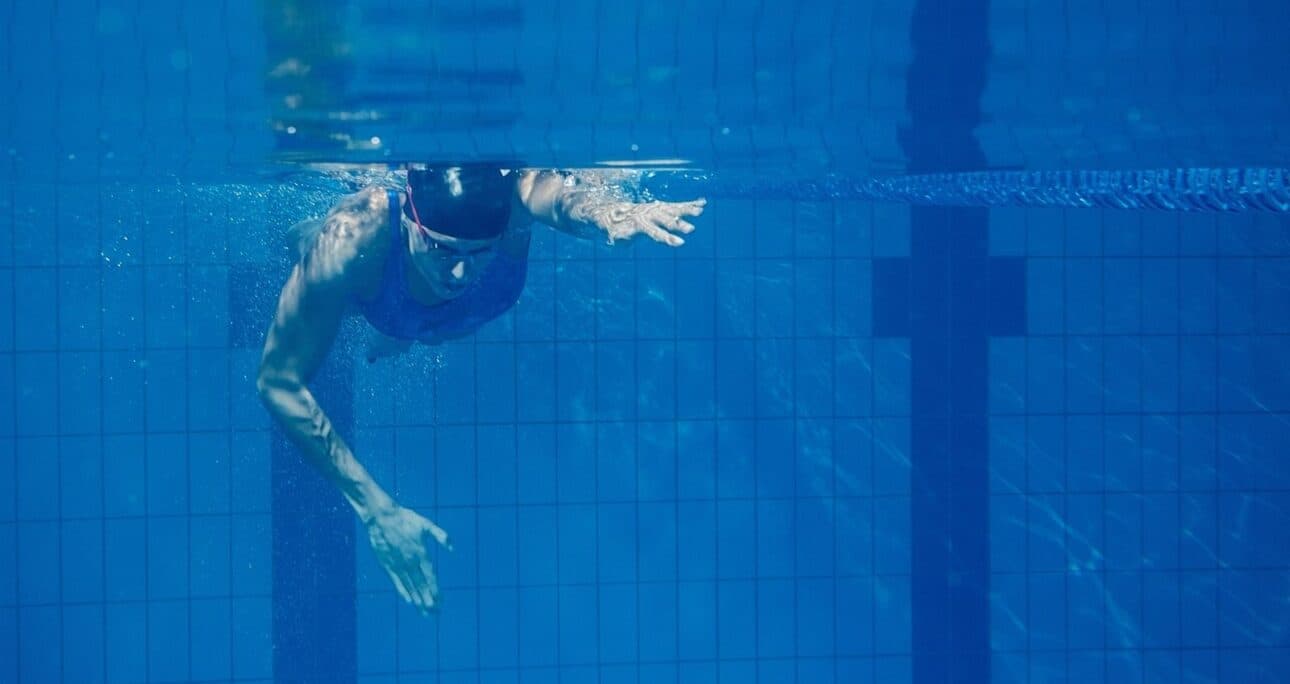
Learning Freestyle Swimming from the Fundamentals: Anatomy of the Freestyle Arm Stroke
5 Golden Stages & the "Anchoring" Mindset
Welcome back everyone to the "Learning the Freestyle Swim Right from the Start" series!
Today's series of lessons is perhaps the most anticipated from coach Vi: the freestyle arm stroke . The right technique and mindset for swimming fast!
But before we get into the details, Vi wants you to temporarily "erase" an old, deeply ingrained thought in many people's subconscious: "I have to paddle really hard." And replace it with a completely new mindset, one that will change the way you swim forever.
Learning Objectives
After reading this article, you will:
Understand the core principle of effective hand-paddling: "Angle your hands, pull the person ," not "pull the water."
Identify the names and functions of the five stages in a hand fanning cycle.
"Dissecting" the Technology: Core Thinking & Journey Map
1. The 'Anchoring' Mindset – A Game Changer
Let's be honest, do you always think of your hands as oars, and that you have to use force to "pull the water" from front to back? This mindset is correct; I teach my students, especially new ones, that way. But, it's not effective enough!
Think professionally: Your hands and forearms are an 'ANCHOR' . You 'throw' that anchor out, 'plant' it in a solid mass of water, and then use the strength of your back, chest, and core to PULL YOUR ENTIRE BODY past that anchor point.
Imagine you're doing pull-ups. Are you pulling the bar down? No. You anchor your hands to the bar and pull yourself up. Freestyle swimming is exactly the same underwater. Your hands and forearms are your pivot points, and you pull your body past those pivot points.
Once you embrace this mindset, you'll begin to activate the right major muscle groups and swim using your whole body, rather than just your arms.
2. Journey Map: 5 Golden Stages of the Hand Fan
The journey of a hand fan cycle is a cyclical process.
Catch (Reinforcing the water): The "anchoring" phase. This is the golden moment when your hands and forearms form a large flat surface to "grip" and "reinforce" the solid mass of water.
Pull: This is the "anchoring" phase. Once the anchor is firmly in place, you will use your large muscles (back, chest) to pull your body past this anchor point. This is the phase that generates the most pushing force.
Push: The "release of the anchor rope" phase. Gradually release the rope to utilize the momentum of the current to push the remaining water backward over the hips and continuously forward, completing the pull.
Recovery (Forward swing): The "retrieving anchor" phase. The arms are out of the water and swung forward in a relaxed, controlled manner.
Entry & Glide: The "anchoring" phase. The hands enter the water smoothly and reach forward, preparing for the next "anchoring" stroke.
Overall Mistakes Can Ruin the Entire "Engine"
'Windmilling': A continuous, non-stop hand-waving motion, without any splashing or gliding movements, just creating foam and looking very hurried.
'Dropped Elbow': The most classic mistake. Your elbow "drops" below your hand while pulling in the water. Result: The anchor slips, and you only pull the anchor back, not your body moving forward.
'Shoulder Swimming': This technique relies solely on the strength of the shoulder joint for pulling, without the involvement of the back, chest, or torso rotation. This is a major cause of shoulder injuries when the muscles become fatigued and you passively "lock the joint" to gain extra pulling force.
Practice Corner: Building New Mindsets
Exercise: First Drill (Fist Penetration)
Objective: To force you to feel the role of your forearm in "water resistance".
Instructions: Clench both hands and swim freestyle normally. Since you can't use your hands, you'll automatically have to find a way to use your forearms as "paddles."
Exercise: Sculling (Paddling/Swimming in the Water)
Objective: This "king" exercise enhances your water feel, helping you understand how to "stick" to the water.
Instructions: Stand or lie in the water, extend both arms forward, and perform a figure-eight motion, sweeping the water back and forth. Focus on feeling the continuously changing water pressure on your palms and forearms.
Advice from Coach Vi
"Water is much heavier than you think, 800 times denser than air. Use it as leverage. Turn the water into a solid wall for you to hold onto and pull your body along."
Summary & Homework Assignment
Summary: The hand-waving technique is a five-stage, interconnected process. The correct mindset is to "anchor your hand and pull the person," not "pull the water."
Homework assignment: Next time you go swimming, try this:
4x25m First Drill: Focus on the feeling of using your forearm to "support" the water.
Stand still and scull (paddle/sweep through the water) for 5-10 minutes to feel the water pressure.
In the following articles, I will "zoom in" on each stage to help you dissect it and apply the techniques to technical editing from the ground up.
Wishing you all a successful mindset change session!
Sincerely, Coach Visark