
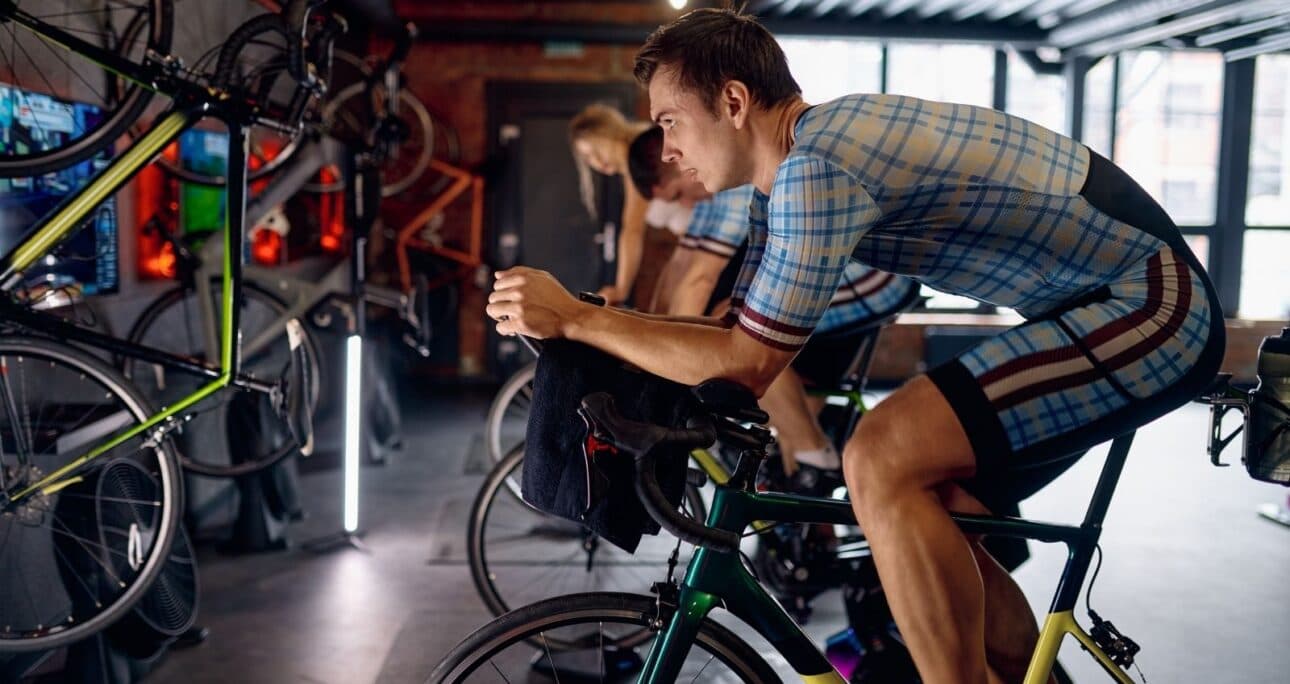
The Forgotten Secret: Proper Warm-up & Cool-down Techniques for Explosive Cycling Performance
Welcome back to Gopeaks Magazine, where we don't just talk about the numbers, but also tell the story behind each spin.
Let's imagine a familiar moment: the starting line. Your legs feel heavy and sluggish. Then, the starting gun fires, your competitor speeds off, and you struggle to catch up. Or another scenario: you've just finished a grueling race and skipped recovery, only to be hit by debilitating muscle soreness (DOMS) in the days that follow.
If these scenarios sound familiar, you've likely been overlooking proper cycling warm-up and cool-down procedures , one of the "secret weapons" of elite athletes. In this in-depth article, we'll decode this art, specifically how to incorporate nerve-stimulating "jerks" to ensure your body is always in peak condition.
Part 1: Why Are Warm-up and Cool-down Exercises Important for Cycling?
To truly appreciate our bodies, we need to understand what's happening inside them. This is pure physiological science.
The Symphony of a Perfect Beginning (The Warm-Up)
A proper warm-up is a precisely coordinated symphony that puts the body into a state of combat readiness.
Optimizing the “Energy Factory”: As muscle temperature increases, the enzymes that produce energy (ATP) become more efficient.
Expanding the "Oxygen Avenue": This warm-up involves dilating the capillaries, allowing oxygen-rich blood to rush to the muscles.
"Firmware Update" for the Neuromuscular System: It activates and accelerates signal transmission from the brain to muscle fibers.
The Art of Recovery: A Scientifically Guided Cycling Cool-Down Process
If the warm-up is the takeoff, then the cool-down is the safe landing process, determining whether you are ready for the next training session.
Bringing the Body Back to Balance: Lowering the body temperature helps to gradually bring heart rate, blood pressure, and stress hormones back to normal.
Start the "Cleaning Team": Gentle pedaling helps maintain blood circulation, aids in the removal of byproducts, and initiates the muscle repair process.
Part 2: The Philosophy of "Awakening Your Feet": Why is Nerve Activation Necessary?
Why isn't just warming up enough? Why is it necessary to "awaken" the body? Short, sudden bursts of speed send a strong signal from the brain to the fast-twitch muscle fibers, saying, "Get ready to work!" This helps you break free from sluggishness and the feeling of "dead legs." A controlled 10-15 second burst doesn't expend much energy, but the benefits in terms of neuromuscular activation are enormous.
This philosophy is reinforced by advanced scientific principles such as VO₂ Priming (activating the aerobic system) and Post-Activation Potentiation – PAP (awakening explosive power).
Part 3: Cycling Warm-up and Cool-down Plans for Each Goal
Below are the optimized processes, incorporating the philosophy of "Awakening Your Feet".
A. For Short Races (Time Trial & Criterium)
Objective: To optimize explosive power from the very first second.
Sample procedure (30-45 minutes):
T-40 minutes: 10-15 minutes of gentle pedaling (Zone 1-2).
T-25 minutes: 5 minutes of cadence drills.
T-20 minutes: 5 minutes of gradually increasing cycling from Zone 3 to Sweet Spot (88-94% FTP).
T-15 minutes: 5 minutes of light pedaling for recovery.
T-10 minutes: [VO₂ PRIMING] 3-4 minutes of intense effort in Zone 5 (106-120% FTP).
T-6 minutes: 4-5 minutes of gentle pedaling for complete recovery.
T-2 minutes: [MAXIMUM ACTIVATION] 2-3 times PAP sprints of 10 seconds, FULL STRENGTH, rest 1-2 minutes between bursts.

A proper warm-up not only heats up the body but also "awakens" the entire neuromuscular system, preparing it for explosive performance.
B. For Long Races & Interval Training
Objective: Intelligent activation, ready for high-intensity efforts without wasting energy.
Sample procedure (15-25 minutes):
T-20 minutes: 10 minutes of gentle pedaling (Zone 1-2).
T-10 minutes: 5 minutes of steady pedaling in Zone 3 (Tempo).
T-5 minutes: [NEUROACTIVATION] 3-4 bursts of 15 seconds each at 120-130% FTP (effort 8/10), rest 45 seconds between bursts.
C. For Endurance Cycling & Recovery
Objective: To gently "awaken" your legs for a comfortable workout session.
Sample procedure (10-15 minutes):
T-15 minutes: 10 minutes of extremely light pedaling (Zone 1).
T-5 minutes: [WAKE UP YOUR LEGS] 2-3 times “Leg Openers” for 10-15 seconds each (effort 6-7/10, just to feel the muscles being activated).
After each workout, don't forget to spend 10-15 minutes cooling down by pedaling very lightly in Zone 1. Immediately after that is the "golden window" for rehydration and energy replenishment; you can learn more about this in our article on Nutrition and Recovery.
Part 4: Answering Frequently Asked Questions
Is static stretching before a race a good idea?
The truth is: No. Static stretching can reduce strength. Save it for after your workout.
Is lowering the temperature meant to expel lactic acid?
The truth is: Not exactly. The main goal is to bring the body back into balance and initiate the recovery process. This entire procedure is recommended by reputable organizations such as USA Cycling .
Is it tiring to "jerk" before a long-distance bike ride?
The truth is: Absolutely not, if done correctly. A gentle "Leg Opener" (effort 6-7/10) only activates the nerves, giving you a better pedaling feel without expending energy.
In conclusion: Become a Smart Athlete
Performance isn't created on race day alone. It's forged in every detail. Practicing proper warm-up and cool-down techniques is a skill, a dialogue between you and your body. By listening to and responding intelligently, you're transforming yourself from someone who just pedals into an artist on the bike.
Do you have any questions about your own process? Leave a comment below; the Gopeaks community is here to listen and share.
If you want a perfectly tailored plan to your goals, don't hesitate to contact Gopeaks coaches. We're here to support you every step of the way.
Wishing you powerful spins and glorious finishes!