

Nutrition for Triathlons: A Comprehensive Plan for the Can Gio Enduro Trifactor Race
Conquering the Enduro distance at Trifactor Can Gio is not just a test of endurance, but also a battle of wits with your own body under harsh climatic conditions. A smart nutrition plan will not only help you reach the finish line, but also determine how you finish: strong, in control, or simply struggling to survive.
This article is the most in-depth and comprehensive guide from Gopeaks Coach. We will dissect advanced scientific concepts and transform them into a practical nutrition plan, helping you take control of your journey.
Part 1: The Scientific Foundation – Deep Understanding of Motivation
To build an effective strategy, you first need to understand how your "engine" works.
Topic 1: Domestic vs. Exogenous Fuels
Your body uses two main sources of energy when competing:
Endogenous Fuel: This is the fuel you already have on hand.
Glycogen: This is the carbohydrate storage reserve in the muscles and liver. Think of it like "premium fuel"—it burns quickly and powerfully, providing energy for high-intensity activities. However, this reserve is very limited. The goal of pre-race carb-loading is to fill this fuel tank.
Fat: A source of energy, like "diesel," with almost unlimited reserves, providing energy for low-intensity and sustained activities.
Exogenous Fuel: This is the energy you consume from external sources during competition – such as energy gels, powders, and sports drinks.
The ultimate goal of nutritional strategy is to use exogenous energy in a disciplined manner to protect and conserve precious endogenous glycogen stores.
Topic 2: Lactate – Not an Enemy, But a High-Performance “Recycled Fuel”
The truth about lactate: Lactate is not the cause of muscle fatigue. It is actually an energy-rich byproduct created when your body burns glycogen at high intensity.
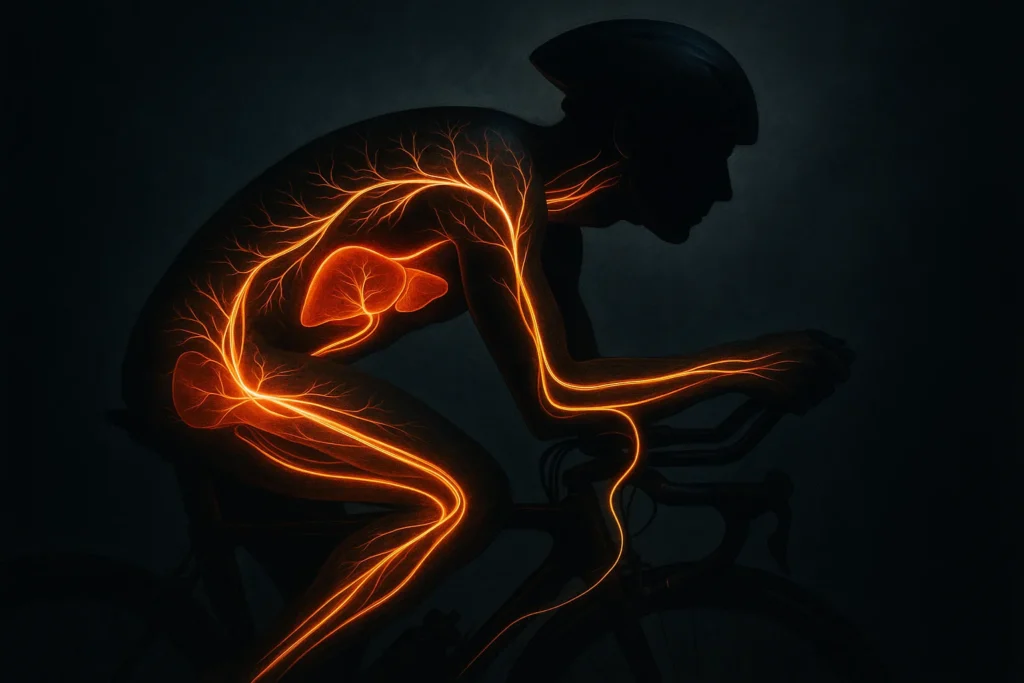
Lactate Recycling: A well-trained body is extremely efficient at "collecting" lactate, transporting it to the heart, liver, and other muscle fibers to convert it back into energy and use it as a high-performance fuel source. An athlete with good lactate recycling capabilities is like a high-performance hybrid vehicle: it runs while simultaneously recharging itself. Gopeaks' Lactate Tolerance and Lactate Clearance exercises are always optimized for utilizing this unlimited renewable energy source!
Topic 3: The Foundation of "Gut Training" and its Relationship with High-Intensity Training
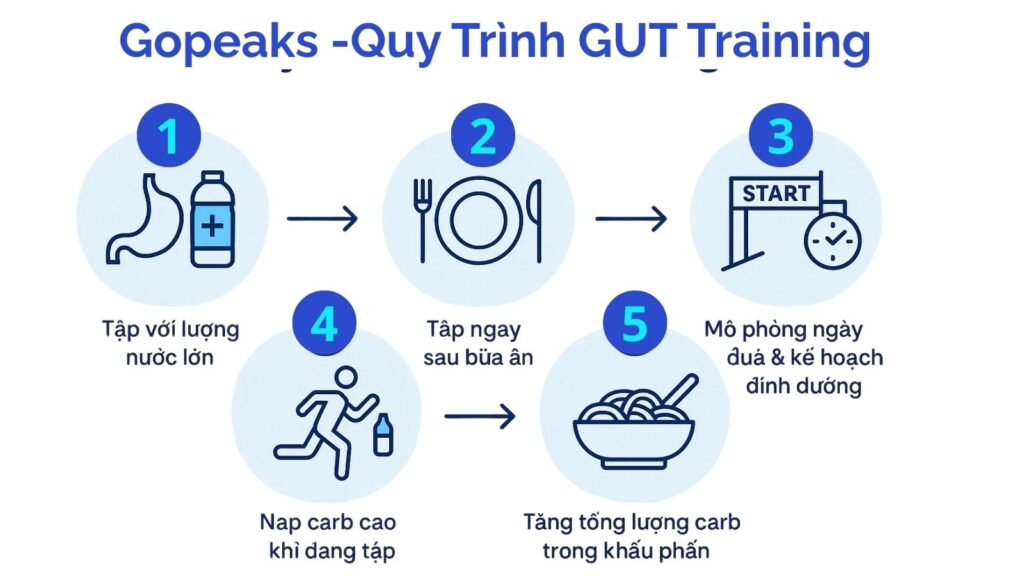
To effectively utilize "exogenous" energy, you need a healthy digestive system. Gut training is the process of "teaching" your stomach and intestines to absorb energy when blood is prioritizing muscle growth. Without gut training, all the above theories are meaningless. Spend at least 4-6 weeks before the race practicing nutritional strategies for long training sessions.
What is Gut Training?
Imagine your digestive system (stomach and intestines) as muscles. You can't go to the gym and immediately lift the heaviest weights. You have to start slowly and gradually increase the weight. Gut training is a systematic exercise process for the digestive system, aiming to:
Increased absorption: Helps your intestines absorb more carbohydrates and fluids per hour.
Increase the speed of gastric emptying: “Teach” the stomach how to push food and liquids down into the small intestine more quickly.
Minimize digestive risks: Reduce problems such as bloating, nausea, abdominal pain, and cramps during high-intensity competition.
One extremely important point: practicing FRC and lactate exercises greatly supports gut training. When you perform heavy interval sets, your body is also under stress, and blood rushes to your muscles just like during a race. Actively consuming energy gels or drinks during or between these sets will "force" your digestive system to learn to work under the most demanding conditions, helping you better cope with stomach issues when pushing your pace at high speeds on race day.
Gut training is the process of "training" the digestive system to absorb energy efficiently under the pressure of competition. A proper procedure will be your secret weapon to avoid stomach problems.
Part 2: Practical Nutrition Plan in Can Gio
Step 1: Determine Your Target Energy (Carbohydrate) Amount
Depending on your experience and level of "Gut Training," you can choose one of the following two levels:
Level 1 (Safe Starting Point):
Cycling: 50–70 g/hour
Running: 40–50 g/hour
Suitable for: Most athletes, especially those new to competition nutrition.
Level 2 (Athletes who have undergone good gut training):
Cycling: 60–90 g/hour
Running: ~60 g/hour
Suitable for: Experienced athletes who have trained and maintained high-intensity energy levels.
Step 2: Choose a Fueling Option for the Cycling Session
This is the first and most important step in building your plan. Based on your experience and level of "Gut Training," you can determine which of the following two levels you belong to. Read carefully to see which level suits you best.
Level 1: Safe Starting Point (50–70 g/hour Cycling, 40–50 g/hour Running)
This is a baseline recommendation, designed to maximize safety and minimize digestive risks.
Suitable for:
Most amateur athletes: Especially those participating in Enduro or 70.3 Ironman races for the first time.
Beginners in competition nutrition: Those who have never systematically practiced fueling during long training sessions.
People with a history of sensitive stomachs: Those who are prone to bloating, nausea, or other digestive problems when exercising.
Athletes whose primary goal is completion: Those who prioritize finishing healthy and happily over competing on time.
Objectives & Principles:
The top priority is stability: providing a continuous, steady flow of energy that the digestive system can easily handle without being overloaded.
Preventing "bonking": This energy level is sufficient to prevent glycogen depletion, helping you maintain endurance throughout the race.
Safety first: Minimize the risk of digestive problems, which are the leading cause of DNF (Did Not Finish) cases.
Practical implementation method:
On a bicycle (50-70g/hour):
Example 1: 1 gel packet (containing ~25g of carbs) every 30 minutes, combined with regular electrolyte water intake. (Total: ~50g carbs/hour).
Example 2: Mix a 750ml bottle with approximately 50g of energy powder and drink it all within the first 1-1.5 hours. For the next hour, you can use 2 gel packets.
When jogging (40-50g/hour):
The simplest and most effective approach is to consume one gel pack (containing 20-25g of carbs) every 30 minutes . This rhythm is easy to follow and maintain, even when you're tired.
Level 2: Optimizing Performance for Experienced Athletes (60–90 g/hour Cycling, ~60 g/hour Running)
This is an advanced level, requiring thorough preparation and intended only for experienced athletes.
Suitable for:
The athlete has seriously practiced Gut Training: You must have at least 4-6 weeks of high-intensity energy-boosting training and be able to easily handle Level 1 energy levels.
Experienced athletes: They have completed numerous triathlons and understand their body's reactions well.
High-achieving athletes: Those aiming to break personal bests (PRs), achieve high rankings within their age group, or compete seriously.
Objectives & Principles:
Maximizing performance: Providing energy levels that closely match the body's expenditure during competition helps maintain a high pace/power for longer periods.
Maximize your body's adaptation: Harness the full benefits of Gut Training, especially the increased number of carbohydrate "transport gateways" (SGLT1 and GLUT5) after training.
Accepting controlled risk: This high energy intake always comes with a slightly higher risk of digestive issues. Athletes must be able to “listen” and adjust immediately if any abnormalities are detected.
Practical implementation method:
On a bicycle (60-90g/hour):
To achieve 90g/hour: This usually requires a combination of several products containing different types of carbohydrates (e.g., Maltodextrin + Fructose).
Example 1: A highly concentrated water bottle containing 90g of energy powder, drunk in small, continuous sips over an hour.
Example 2: A container with 60g of carbs + a large gel pack containing 30g of carbs in the same hour.
Example 3: Divide 3 gel packets (3 x 30g carbs) evenly and consume every 20 minutes.
When jogging (~60g/hour):
This is a real challenge for the digestive system. The rate of energy intake has to be more frequent.
Instructions: Use 1 gel packet (containing 20g of carbs) every 20 minutes , or 1 large gel packet (30g of carbs) every 30 minutes . The timing must be precise.
Be honest about your current level and preparation. Starting at Level 1 is always a wise choice. Trying to jump to Level 2 without adequate practice is one of the most common mistakes that can ruin your entire race.
Step 3: Planning for Salt (Sodium) Replacement – The Balancing Problem
Gopeaks Coach's recommendation for Vietnamese athletes: Start at a safe level of 300-600 mg sodium/hour.
Practical calculation: One SaltStick contains approximately 215 mg of sodium. Therefore, a target of ~400 mg/hour would be equivalent to about 2 SaltSticks per hour.
Extremely Important Note: The Risk of Nutrient "Cumulative" Consumption
One of the most common mistakes is calculating the nutritional value of each product individually. Always remember that the nutrients are added together.
For example, regarding sodium: You take a salt tablet (215mg sodium), use a gel packet (100mg sodium), and drink electrolyte water (250mg sodium/bottle). In just one hour, you've consumed nearly 600mg of sodium.
Example regarding carbs: Similarly, if an energy drink already contains 60g of carbs, you don't need to consume two additional gel packets within the same timeframe.
Tip: Always read the labels of ALL the products you use and calculate the TOTAL intake per hour to ensure you're on track.
Part 3: Summary of the Plan & Final Advice
Understanding your body: Understanding your body's internal fuel and lactate recycling capabilities helps you train and compete smarter.
Strategic energy replenishment: Choose the energy level (Level 1 or 2) and replenishment option (A or B) that suits you best.
Proper salt replacement: Start at a safe level (~2 SaltSticks/hour) and calculate the total from all sources.
Practice, practice, practice: Never try anything new on race day.
Nutrition isn't a rigid formula; it's a continuous dialogue with your body. Wishing you a successful competition, mastering your energy, and finishing with pride at Trifactor Can Gio!
To the Gopeaks warriors ,
All the training sessions from dawn, the sweat shed, and the silent sacrifices… all of it has led you to where you are today. Now is not the time to doubt, but the time to believe.
Believe in your training process. Believe in the disciplined plan you've created. And most importantly, believe in yourself.
Today, you don't need to compete against anyone else. Compete against the best version of yourself. Stick to your nutrition plan, control your pace on the bike, and listen to your body on the run.
When you feel tired, remember why you started. Look around, feel the energy of the race, and smile. Because just being here is a victory.
The finish line awaits you. Show it what a true champion is like!
Wishing you a fantastic day of competition and a safe finish.
With love and see you at the finish line,