
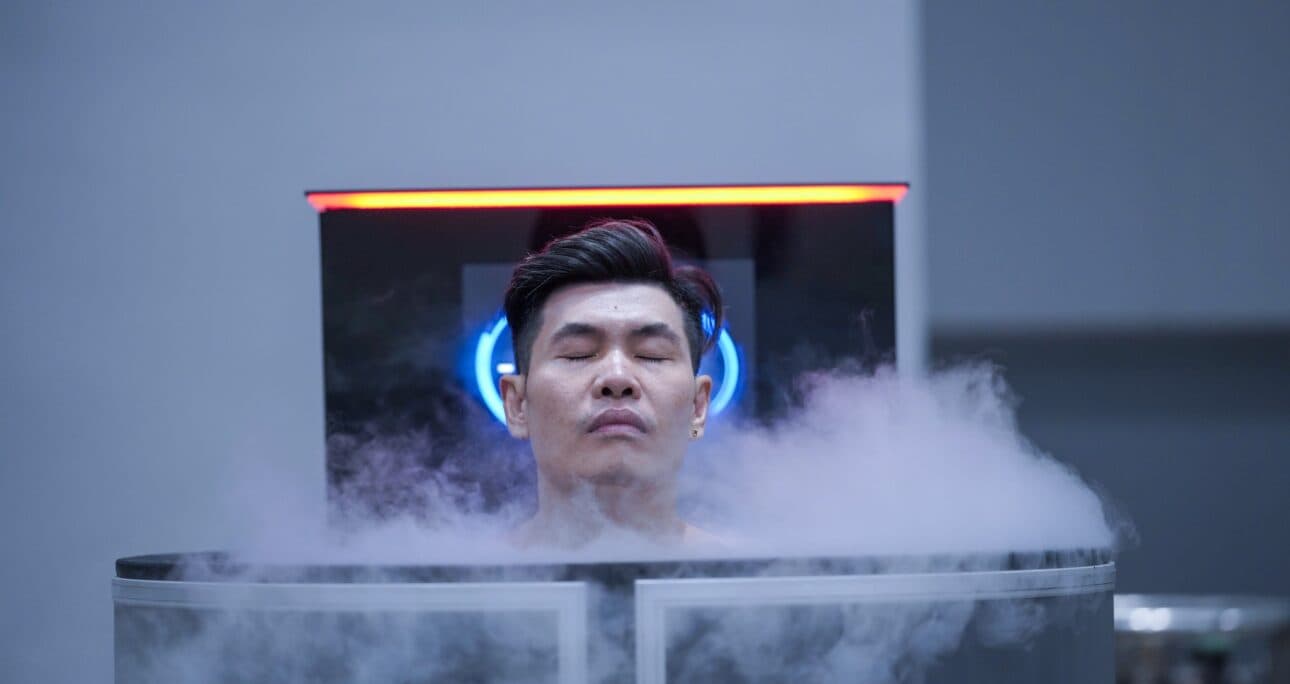
Cryotherapy – A Breakthrough Cold Therapy for Body & Mind
Cryotherapy, or whole-body cryotherapy ( WBC ), is a method of exposing the body to extremely low temperatures (−110°C to −140°C) for a short period, usually 2–3 minutes.
Originally developed in Japan in the late 1970s to aid in the treatment of rheumatoid arthritis, cryotherapy quickly gained widespread application in sports, injury rehabilitation, and more recently, mental health care.
This article will help you understand how cryotherapy works, its benefits, and the scientific evidence behind these effects.
1. Mechanism of Action of Cryotherapy
When the body is exposed to an environment of -110°C, a series of physiological reactions occur:
Peripheral vasoconstriction is strong to retain heat in vital organs.
It activates the sympathetic nervous system , releasing norepinephrine – a neurotransmitter that helps reduce pain and improve alertness.
Compensatory vasodilation following cryotherapy helps increase blood flow, delivering oxygen and nutrients to the tissues.
Pain signals are reduced by slowing down the conduction of sensory nerve impulses.
2. The Benefits of Cryotherapy – and the Scientific Evidence
2.1. Reduces inflammation and supports muscle recovery
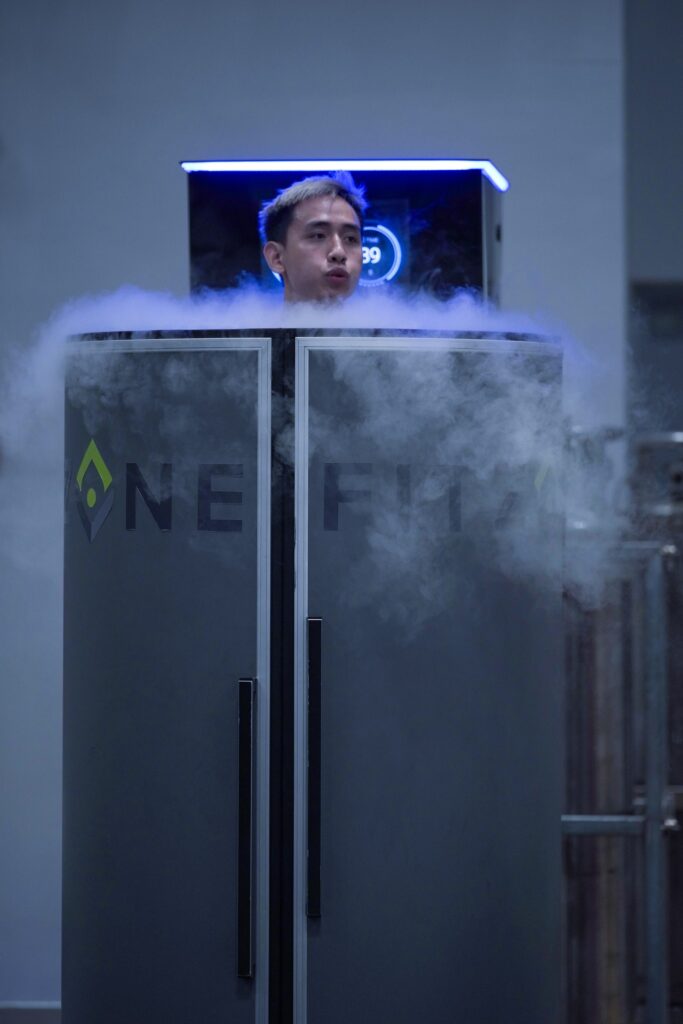
Whole-body cryotherapy at -112°C – a solution to reduce inflammation, improve circulation, and accelerate recovery after high-intensity workouts at Fitzone.
One of the most well-known benefits of cryotherapy is its ability to reduce inflammation after high-intensity exercise and its effectiveness in managing physiological stress.
2.1.1. Cryotherapy effectively helps to manage physiological stress through the HPA (Hypothalamic–Pituitary–Adrenal axis) axis.
HPA stands for Hypothalamic–Pituitary–Adrenal axis .
Hypothalamus : receives stress signals and secretes CRH (Corticotropin-releasing hormone).
Pituitary gland : receives CRH signals and secretes ACTH (Adrenocorticotropic hormone). Adrenal gland : receives ACTH signals and produces cortisol and other stress hormones.
This HPA axis plays a central role in the body's stress response.
A study conducted on healthy women over 12 weeks compared two forms of treatment: ice baths (0–2°C) and whole-body cryotherapy (-110°C).
Time: Cryo 2 minutes / Ice bath 20 seconds
Frequency: 3 times/week
After just one cryotherapy session at -110°C for 2 minutes , plasma norepinephrine levels increased 2–3 times. Norepinephrine not only helps reduce pain but also has a strong anti-inflammatory effect .
Stress hormones like cortisol and ACTH decrease over time, indicating that the body is adapting and not experiencing prolonged stress from cold therapy.
When applied consistently over multiple sessions, cryotherapy significantly reduces systemic inflammatory markers while improving muscle recovery.
Practical significance : This is one of the pieces of evidence supporting the positive impact on the HPA axis when applying cryotherapy. Cryotherapy activates the HPA axis in a controlled manner, demonstrated by a sharp increase in plasma norepinephrine after each cryotherapy session. With continuous application, the study showed that stress hormones such as cortisol and ACTH gradually decreased, indicating good adaptation and a non-prolonged stress response. This is the fundamental mechanism by which cryotherapy helps reduce pain, inflammation, and improve muscle recovery.
2.1.2. Cryotherapy has a positive impact on late-onset pain (DOMS).
In 2018, by synthesizing and analyzing data from 99 studies from PubMed, Embase, and Web-of-Science.
This study analyzes and evaluates the effectiveness of rehabilitation therapies such as active rehabilitation, massage, cryotherapy, and water-based thermocontrast therapy for late-onset myalgia (DOMS).
The final results showed that cryotherapy and massage were the two most effective therapies for reducing DOMS and feelings of fatigue.
Practical significance : Athletes or those training intensely can shorten recovery time, reduce DOMS (late-onset muscle soreness), and be ready for the next training session. This facilitates increased training and competition performance.
2.2. Improving mood and mental health
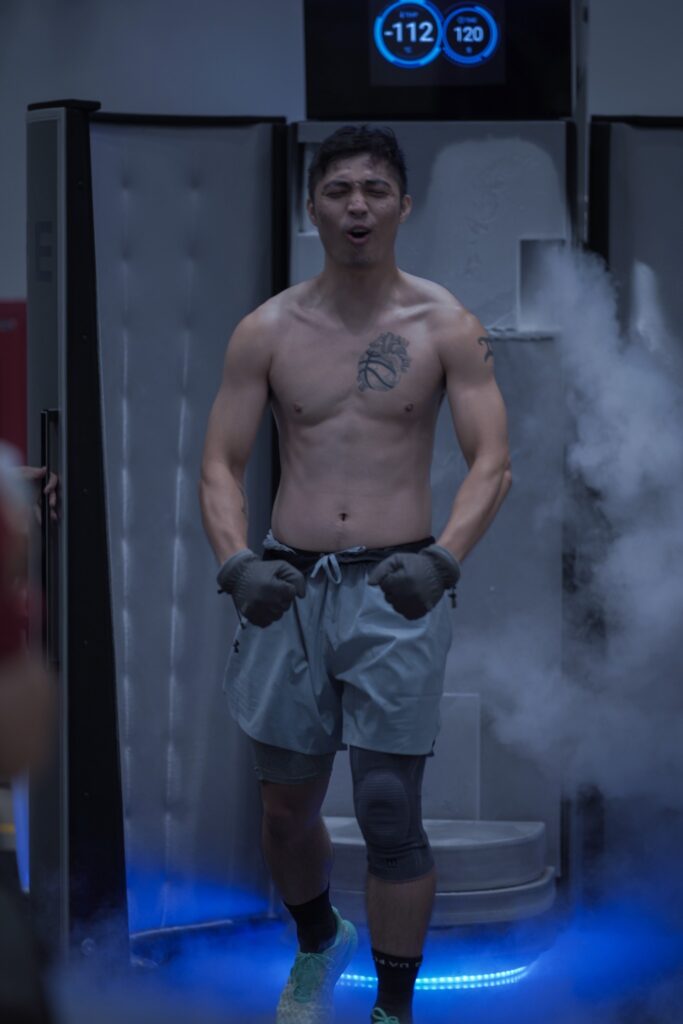
Whole-body cryotherapy at -112°C – the secret to reducing inflammation and accelerating recovery after high-intensity exercise at Fitzone.
2.2.1 Cryotherapy is not only a physical therapy method for the body, but also a "mental therapy".
In 2000, a study in Wrocław showed that immediately after leaving the cryotherapy chamber, participants not only experienced pain relief but also reported:
– Improved mood
– Deep relaxation
– Refreshed and revitalized
– Optimistic, cheerful, and relieved state
More importantly, this positive effect lasts long after the treatment ends and is being continuously monitored for sustainability at research centers.
2.2.2. Cryotherapy is used to support the treatment of anxiety and depression.
In 2007, a clinical study conducted in Poland showed that:
Fifteen consecutive cryotherapy sessions over three weeks (each lasting 2–3 minutes at temperatures between -110°C and -160°C) significantly reduced symptoms of depression and anxiety, while dramatically increasing life satisfaction.
Participants were divided into two groups, continuing to take their medication as usual. However, the group that received additional cryotherapy showed the following results:
Significant improvement compared to the group that only received medication.
Mood was better than average in 12 out of 16 depression indicators.
Anxiety decreased in 11 out of 14 indicators.
Happier in 6 out of 11 aspects of life, including: physical well-being, work, personal passions, and overall satisfaction.
The research team concluded that short-term, cyclical exposure to extremely low temperatures significantly reduced the severity of depression and anxiety symptoms while improving life satisfaction.
In 2013, a clinical study published in the journal Psychology, Health & Medicine showed that:
After just 10 cryotherapy sessions, patients' scores for mood, emotions, and overall well-being improved significantly and statistically.
This effect is particularly strong in:
Women
People with chronic back pain
And especially those who are showing signs of severe depression.
Interestingly, the worse the mood before cryotherapy, the stronger the improvement.
Practical significance : Cryotherapy acts like a "biological boost," helping those experiencing mental exhaustion regain positive feelings and upliftment in a short period of time. It can be considered a supplementary tool for individuals suffering from stress, mild to moderate depression, or low energy levels.
3. Optimal treatment regimen and application methods are only available at Fitzone
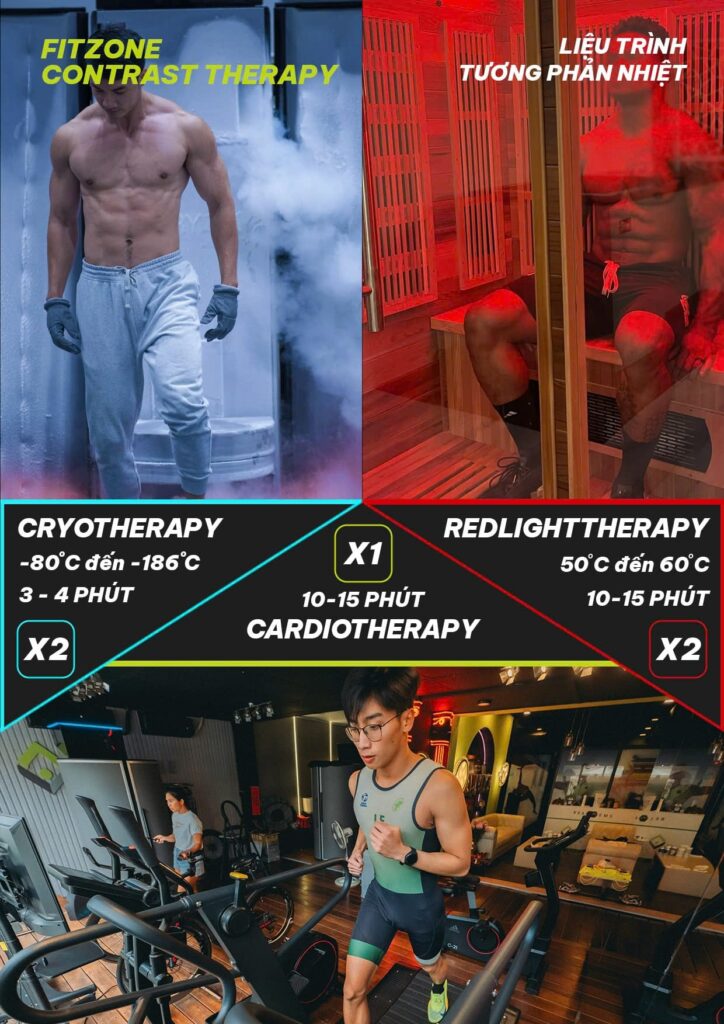
Fitzone Contrast Therapy combines three methods: Cryotherapy (-80°C to -186°C, 3–4 minutes), Red Light Therapy (50°C–60°C, 10–15 minutes), and Cardio (10–15 minutes). This treatment stimulates blood circulation, reduces inflammation, increases metabolism, and accelerates recovery after exercise.
Recommended frequency : 2–3 sessions/week for sports recovery; 8–10 consecutive sessions for mental health improvement or chronic pain relief.
Combination : Nutrition, sleep, EMS, stretching and massage, and active recovery methods.
The unique contrast therapy at Fitzone begins with an Infrared Red Light Sauna (50°C–60°C) to dilate blood vessels, increase blood flow, deliver oxygen and nutrients to muscle tissue, and activate the parasympathetic nervous system for relaxation. Immediately afterward, Cryotherapy (-80°C to -160°C) quickly constricts blood vessels, reduces inflammation and muscle soreness, and stimulates the sympathetic nervous system. This alternating "hot-cold" cycle not only promotes recovery and eliminates post-workout metabolic waste but also helps the body better adapt to physiological stress, improve athletic performance, and provide a feeling of alertness and refreshment.
Safety note : Contraindicated in patients with severe cardiovascular disease, uncontrolled high blood pressure, and pregnant women.
Conclude
Cryotherapy is not simply a "cold therapy" but a holistic biological approach supported by numerous reliable scientific studies. From reducing inflammation and relieving pain to improving mood and sleep, and enhancing athletic performance – all have been confirmed by reputable international research. This therapy offers far-reaching benefits for both physical and mental health.