
Triathlon Empires – Part II: Challenge Roth – The Heart and Soul of the Race
There's a place in the world of triathlon where the laws of physics seem to bend. It's a not-too-long, not-too-harsh slope with a poetic name: Solarer Berg – the Hill of the Sun. But once a year, on a Sunday in July, it transforms into a living hell, a furnace of emotions.
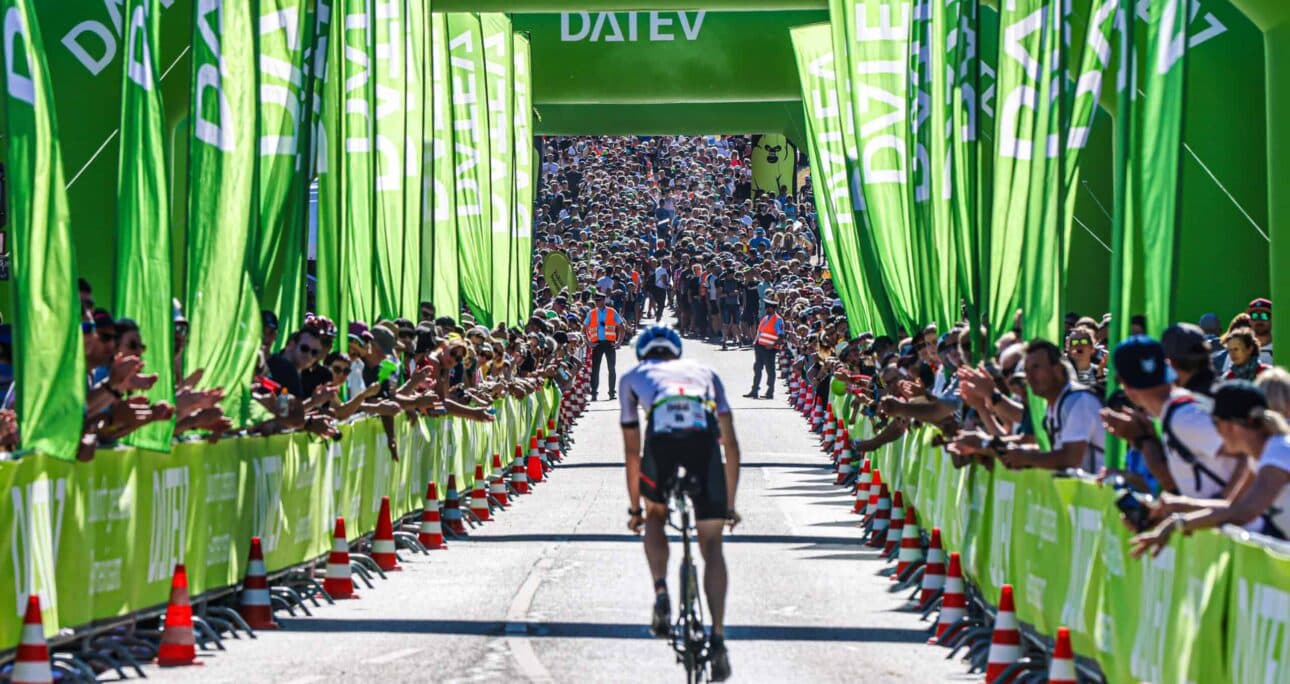
Hundreds of thousands of people crammed together, standing so close that only a narrow passageway was left for a single bicycle to squeeze through. When an athlete entered, a collective growl arose, then erupted into a seismic explosion of sound. Cheers, cowbells, rock music, the banging of billboards—all combined into a wall of sound pressing directly into your chest. You were no longer cycling uphill. You were being propelled forward by a tsunami of human passion.
This isn't Kona. This isn't the Olympics. This is Roth.
In a world dominated by the mighty Ironman brand, how did a small town in Bavaria, Germany, create and sustain the most beloved, fastest, and most passionate long-distance race on the planet? The answer doesn't lie in brilliant marketing strategies. It lies in a historic "divorce," in a philosophy that puts people at the center, and in the heart of a community that has come to regard this race as its very soul.
Chapter 1: Origins – The Golden Years Under the Ironman Banner (1988-2001)
To understand the greatness of Challenge Roth today, we must go back to the past, to the time when it had another name: Ironman Europe.
In the late 1980s, long-distance triathlon was still an American "specialty," with Hawaii as its home. Europe, despite having a vibrant sporting community, lacked a truly large-scale Ironman race. A man named Herbert Walchshöfer , a passionate teacher and local event organizer in Roth, saw this opportunity. He flew to Hawaii, negotiated, and successfully brought the Ironman brand to his small town.
In 1988, Ironman Europe was held for the first time in Roth. No one could have predicted its success. Instead of the harshness and isolation of the lava fields of Kona, athletes arriving in Roth were greeted by something entirely different: the warmth of an entire community. The whole town of Roth and surrounding villages embraced the race. People opened their homes to the athletes, they lined the roads for hours to cheer them on, and they set up their own water stations and parties.
Under the dedicated leadership of the Walchshöfer family, Ironman Europe at Roth quickly became a legend. It was renowned for its incredibly fast course, impeccable organization, and above all, a festive atmosphere unlike anywhere else. It became the gold standard for the athlete experience. Throughout the 1990s, if Kona was the place for professional athletes to compete for world championships, Roth was where everyone, professional to amateur, came to experience the purest love of triathlon.
Chapter 2: The Historic “Divorce” and the Birth of a “Giant” (2001-2002)
In the late 1990s, World Triathlon Corporation (WTC), the company that owns the Ironman brand, began to change. They pursued a globalized business model, standardized races, and increased franchise fees. A distinctly "American" philosophy focused on profit began to be implemented.
This created a cultural and philosophical conflict with the Walchshöfer family in Roth. Herbert Walchshöfer, and later his son Felix, believed that the soul of the race lay in the local community and the unique athlete experience. They felt that the new WTC policies were gradually eroding the distinctive character that had made Roth a legend. The conflict reached its peak in 2001.
Faced with a choice: either comply with Ironman's increasingly stringent and expensive regulations, or abandon the most prestigious brand in the endurance world to forge their own path, the Walchshöfer family made an incredibly courageous decision. They chose the second path.
It was a huge gamble. Losing the "Ironman" name meant they risked losing everything: professional athletes, media attention, and even amateur athletes worldwide. But they had a strong belief that people loved Roth not because of the "Ironman" name, but because of the experience at Roth itself.
In 2002, a new brand was born: Challenge Roth . Along with it, a new “family,” the Challenge Family , was created with a clear mission.
The inaugural Roth Challenge race in July 2002 was a test of that belief. And the results exceeded all expectations. The local community showed more support than ever before. Top professional athletes from around the world flocked to the race. Thousands of amateur runners still registered, loyal to the "Roth spirit" rather than a brand. The race was a resounding success. The Walchshöfer family proved one thing: the soul of a race can be stronger than a global brand. A new "giant" had truly risen from the heart of Europe.
Chapter 3: The DNA of Challenge – “All for the Athletes”
So, what makes the difference, what is the DNA of Challenge Family? It's a simple yet powerful philosophy: "All About the Athlete ." This philosophy is reflected in every aspect.
Festive Atmosphere: Unlike many other races that can feel tense and somewhat "industrial," Challenge events, especially Roth, feel like a massive music and sports festival. From late-night "Finish Line Parties" and fireworks celebrating the last to cross the finish line, to relay stations decorated and cheered on by local clubs, participating in Challenge Roth is like joining a community party.
The Exceptional Athlete Experience: Challenge always strives to remove unnecessary barriers for athletes. Cut-off times are often more generous, allowing those who aren't particularly fast to still have a chance to achieve their dreams. Aid stations are renowned for their abundance and variety. Respect is shown to both professional athletes and age group athletes. At the finish line in Roth, every finisher, whether champion or last place after nearly 17 hours, is greeted in a packed stadium and hailed as a hero.
The Record-Breaking Race Track: Part of Roth's appeal comes from its incredibly fast pace. But that's no accident. The organizers constantly listen to athlete feedback to improve every corner and every section of the track. This meticulous attention to detail, combined with the incredible support from the spectators, has made Roth a "holy grail" for long-distance world records. The greatest names, such as Jan Frodeno, Chrissie Wellington, Daniela Ryf, and more recently Magnus Ditlev, have all set some of the most unbelievable world records on this very track.
Global Growth: Building on Roth's resounding success, the Challenge Family brand has expanded globally, bringing the "All About the Athlete" philosophy to many countries, creating a high-quality race ecosystem that is a genuine choice for athletes who don't want to participate in Ironman events.
Conclusion: Roth – The Immortal Heart of Triathlon
The story of Challenge Roth is more than just a race. It's a lesson in courage, the power of community, and loyalty to core values. In a world of sports increasingly dominated by profit and commercialism, Roth stands as a beacon, a reminder of what truly matters: people, experiences, the pure joy of pushing one's limits amidst the cheers of thousands.
It has proven that a people-centered philosophy can build a brand strong enough to challenge an entire empire. The competition that Challenge created has forced the entire triathlon industry to improve and pay more attention to its athletes.
At Gopeaks, we share that philosophy. We believe that technology and data are tools, but the heart and emotions of the athlete are the soul. And every time we help a student plan their race, we carry a part of Roth's legacy: the legacy of creating unforgettable experiences and celebrating each individual's journey. Because ultimately, each of us deserves to be welcomed at the finish line as a hero.